

As Uratta and Old Express Roads Await Reconstruction, Abia’s Governor Demonstrates the Power of Vision, Resilience and Determined Leadership in the Pursuit of a Working Abia
By Mr. Odinakachi Eric Eme
Senior Special Assistant on Multilateral and Donor Agencies and Acting Chief Liaison Officer, Abuja.
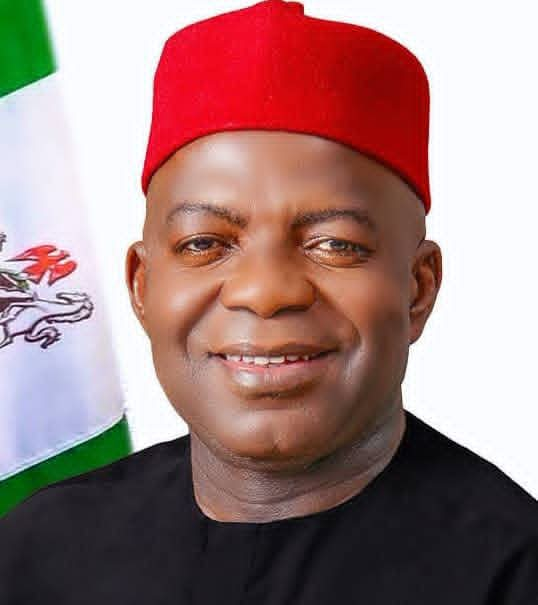
In the history of governance, there are projects that test the administrative competence of a government, and there are projects that reveal the true character of its leadership. The Abia State Integrated Infrastructure Development Project (ABSIIDP) belongs to the latter category. Its long and complicated journey from conception to implementation illustrates the difficulties of development administration, the consequences of prolonged institutional delays and, ultimately, the importance of a leader who possesses the vision, political will and resilience to move an ambitious undertaking towards reality. As His Excellency, Dr Alex Chioma Otti, OFR, Governor of Abia State, prepares to flag off the reconstruction of Uratta Road and Old Express Road in Aba on October 21, 2026, the occasion offers more than an opportunity to celebrate two important road projects. It presents an opportunity to examine a defining dimension of his administration: the determination to confront Abia’s inherited infrastructure challenges, advance a complex development programme and reposition the state for a future in which governance is measured by tangible outcomes rather than the longevity of political promises.
To understand the significance of ABSIIDP, it is necessary to return to its origins and examine the circumstances that kept the initiative in preparation for years before the current administration. The programme emerged from the recognition that Aba and Umuahia, two of Abia’s most important urban centres, required a coordinated infrastructure intervention to address deteriorating roads, erosion, inadequate drainage and the wider environmental challenges undermining urban productivity. Aba, in particular, occupies a strategic position in southeastern Nigeria’s commercial economy. Its manufacturing enterprises, trading networks, artisans and entrepreneurial population represent an enormous economic asset. Yet, for years, the city’s infrastructure deficit constrained that potential, increasing transportation costs, complicating the movement of goods and exposing residents and businesses to the consequences of inadequate urban planning and maintenance.

The conceptual foundation of ABSIIDP predates the administration of Dr Alex Otti. Records of the African Development Bank indicate that the Abia State Government initiated engagement with the Bank through the Federal Government of Nigeria in 2014 to seek support for the proposed infrastructure programme. Subsequent consultations revealed the need for feasibility studies, detailed engineering designs and environmental and social assessments before the proposed investments could proceed to full implementation. In May 2018, a request for financing to support project preparation was submitted to the African Development Bank. Preparation financing was approved in February 2019, while further procurement and consultancy processes followed, including an expression of interest published in June 2020 for studies covering roads, erosion control and solid waste management. Progress reports continued to appear in the Bank’s records through the years that followed. These developments demonstrate that the idea was not new; rather, it was an ambitious undertaking whose preparation extended across successive administrations without the wider programme advancing into the comprehensive physical implementation its proponents envisaged. The distinction is important. The challenge confronting Abia was not the absence of an infrastructure vision, but the difficulty of converting a longstanding development proposal into a fully financed and executable programme.
The historical record also demands an honest assessment of the institutional and technical obstacles that confronted the project. Large-scale infrastructure programmes cannot be delivered by political declarations alone. They require feasibility studies, engineering designs, environmental safeguards, procurement procedures, financing agreements, counterpart funding, coordination among government institutions and sustained engagement with development partners. In ABSIIDP’s case, the preparatory phase extended over several years, illustrating the distance between identifying a developmental need and satisfying the conditions required to finance and execute a project of this magnitude. The complexity was compounded by the need to coordinate the Abia State Government, the Federal Government of Nigeria and international development finance institutions. Each participant had responsibilities, procedures and approvals to fulfil. The result was a prolonged gestation period for a programme intended to address infrastructure deficiencies that were already affecting the daily lives of citizens and the productive capacity of Aba and Umuahia.
It was against this background that Dr Alex Otti assumed office in May 2023, inheriting an infrastructure agenda that demanded not merely continuity but a more determined effort to move from preparation towards implementation. His emergence introduced a new political imperative: the urgent need to translate Abia’s developmental aspirations into practical interventions capable of improving the lives of its people. In the case of ABSIIDP, the administration’s challenge was to sustain engagement with development partners, advance the necessary financing arrangements, strengthen institutional coordination and ensure that the programme did not remain indefinitely confined to technical documents and administrative processes. This is where the significance of Otti’s leadership becomes apparent. He inherited a programme with a lengthy history, but he recognised that the ultimate value of such an initiative lay not in its age, the sophistication of its documentation or the number of meetings held in its name. Its value lay in the infrastructure it could deliver, the economic opportunities it could unlock and the improvements it could bring to the lives of Ndi Abia.
A major milestone came on June 21, 2023, when the African Development Bank approved the road component of ABSIIDP Phase I. The approved financing comprised an AfDB loan of up to US$100 million and a US$15 million facility from the Canada–Africa Development Bank Climate Fund. The financing agreements for these components were subsequently signed in April 2024. This development was particularly significant because it advanced the road rehabilitation component beyond the preparatory stage and established an important foundation for the programme’s implementation. Although the AfDB approval followed Otti’s assumption of office by only a few weeks, it would be inaccurate to attribute the entire preceding preparation process exclusively to his administration. The more meaningful assessment is that his government inherited the ongoing process and continued to pursue the programme as part of its broader infrastructure agenda. Political leadership is not necessarily demonstrated by originating every project; it is often demonstrated by the capacity to take an existing initiative, overcome the obstacles that have delayed it and bring it closer to delivering public value.
The administration’s efforts subsequently extended beyond the AfDB-supported road component. Recognising that the infrastructure challenges of Aba and Umuahia required a wider intervention, the state pursued the participation of the Islamic Development Bank in the financing framework. This was a significant strategic consideration because the long-term ambition of ABSIIDP was broader than the rehabilitation of selected roads. The programme was designed to encompass road infrastructure, erosion control and preparatory work for improved solid waste management, thereby establishing a more integrated approach to urban development. The engagement with additional development partners strengthened the prospect of mobilising the resources required to address these interconnected challenges. In his own account of the programme, Governor Otti acknowledged that ABSIIDP had been conceived before his administration but emphasised that his government had worked to broaden its scope from a narrower focus on urban roads into a more comprehensive development initiative encompassing road rehabilitation, erosion mitigation and waste management. This evolution is an important part of the administration’s contribution to the project.
A further decisive milestone was recorded in August 2025, when the Federal Executive Council approved the US$125 million Islamic Development Bank financing facility for the infrastructure programme. With the US$100 million AfDB loan, the US$15 million Canada–Africa Development Bank Climate Fund facility and the Abia State Government’s US$23.8 million counterpart contribution, the overall financing framework amounted to approximately US$263.8 million. The Federal Government’s approval was a critical step in completing the financing arrangements required for the programme. It also demonstrated the importance of cooperation among the state government, the Federal Government and multilateral development institutions in advancing large-scale infrastructure investments. The scale of the financing framework is noteworthy, but its significance goes beyond the headline figures. It represents an opportunity to move from years of project preparation towards a coordinated programme capable of addressing some of the most persistent infrastructure challenges in Abia’s principal urban centres.
However, securing financing is only one part of the challenge. A government must also ensure that the resources mobilised translate into timely implementation. This is where Otti’s hands-on approach to the subsequent bottlenecks becomes particularly instructive. In March 2026, during a meeting with a delegation from the Federal Ministry of Finance and the African Development Bank, the Governor moved to address issues impeding the commencement of ABSIIDP projects. The state had paid ₦2 billion in counterpart funding, while the remaining challenges included internal communication and coordination gaps that were slowing progress. Otti expressed dissatisfaction with the prospect of further delays and insisted that the state should accelerate preparations for the commencement of the projects. He directed his Chief of Staff to participate in the implementation team and ensure that weekly progress reports reached him. He also rejected the proposed mid-year flag-off timeline, insisting on an earlier commencement to avoid losing additional time, particularly with the rainy season approaching. The intervention revealed an important dimension of his governing philosophy: the recognition that projects can be delayed not only by a lack of money or external approvals but also by internal bureaucratic inertia, weak reporting structures and inadequate executive oversight. By demanding clearer accountability and more frequent progress reports, the Governor sought to address the administrative weaknesses that threatened to undermine the project’s momentum.
This intervention deserves particular attention because it speaks to the difference between ceremonial leadership and operational leadership. A governor may approve a project, announce a financing arrangement and publicly express his commitment to development, yet the initiative can still stall if the machinery of government does not function effectively. Otti’s insistence on direct reporting and accelerated action reflected an understanding that public administration must be organised around delivery. It also demonstrated his willingness to interrogate the processes within his own government rather than automatically attribute every delay to external institutions. Such an approach is important in a development environment where responsibilities are distributed across multiple agencies and where administrative gaps can quietly consume valuable time. By seeking to identify and resolve internal bottlenecks, the Governor reinforced the principle that securing external financing must be matched by institutional readiness and executive discipline. This is a significant lesson for governance in Abia and beyond: the capacity to mobilise resources is valuable, but the capacity to organise government around the effective use of those resources is equally indispensable.
The financial structure of ABSIIDP further illustrates the magnitude of the undertaking. The programme’s road component envisages the rehabilitation of approximately 190.43 kilometres of roads in Aba and 58.03 kilometres in Umuahia. The wider programme includes erosion-control interventions and preparatory work relating to solid waste management, with the objective of improving urban mobility, strengthening environmental resilience and creating a more supportive environment for economic activity. The project is also expected to generate employment opportunities, including through a youth road maintenance initiative designed to strengthen local capacity and support the long-term maintenance of the infrastructure. These components reveal that ABSIIDP is not simply a collection of road contracts. It is a development framework with the potential to improve connectivity, reduce travel times, lower vehicle operating costs, support commercial activity and create opportunities for local employment. Its integrated design is particularly relevant to Aba, where the quality of infrastructure has a direct relationship with the competitiveness of businesses and the daily welfare of residents.
The planned flag-off of Uratta Road and Old Express Road on October 21, 2026, therefore represents an important stage in this wider journey. The roads are among the corridors identified for reconstruction under the programme, with the intervention intended to improve movement and support commercial activity in Aba. Their significance is amplified by the city’s role as an economic centre whose prosperity depends substantially on the efficient movement of goods, services and people. For manufacturers, better roads can reduce logistical difficulties. For traders, they can improve access to markets and customers. For residents, they can make daily movement easier and improve access to essential services. For investors, they can contribute to a more attractive business environment. The reconstruction of these corridors is thus part of the broader effort to restore the physical infrastructure that supports Aba’s commercial identity. The contractor identified for the two roads is CECE, according to the information supplied ahead of the flag-off. The ultimate test will be the quality of execution, the adequacy of drainage, adherence to engineering specifications and the durability of the completed works.
Dr Alex Otti, OFR, deserves recognition for the determination to advance a project whose history predates his administration but whose successful implementation has become an important part of his development agenda. His record on ABSIIDP illustrates a central truth about leadership: the real test is not simply whether a challenge is inherited, but whether the courage, competence and political will exist to confront it. As Uratta Road and Old Express Road move towards reconstruction, the expectation is that the same determination will carry the wider programme through to completion. The flag-off is a milestone; the completed roads will be the achievement; and the lasting improvement of Abia’s infrastructure will be the legacy.
Odinakachi Eric Eme
Senior Special Assistant on Multilateral and Donor Agencies and Acting Chief Liaison Officer, Abuja.