

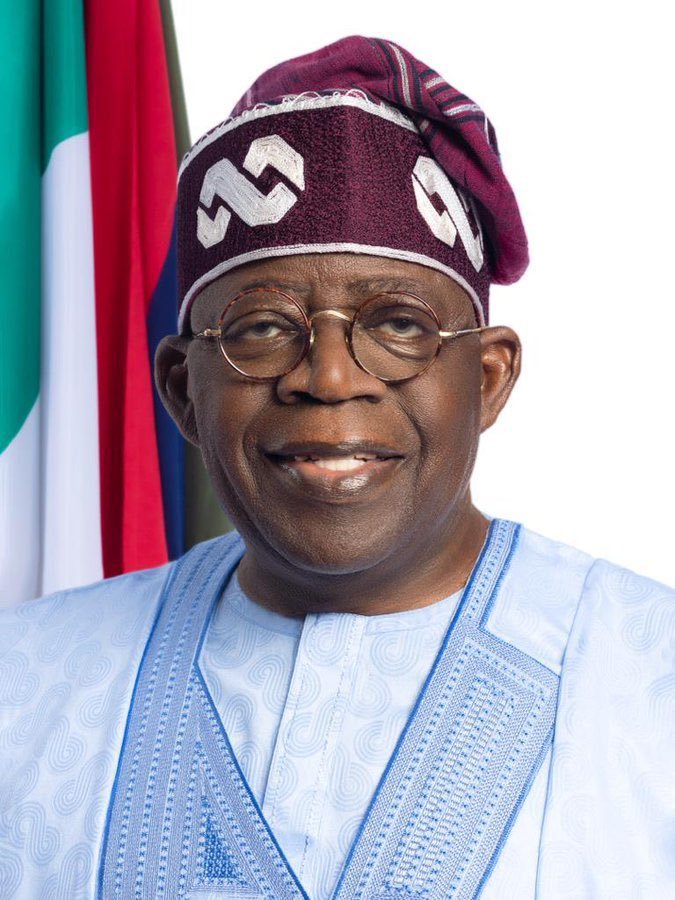
The South-West, where President Bola Tinubu hails from, is likely to play a decisive role in determining the outcome of Nigeria’s 2027 presidential election, according to the first wave of the Nigeria 2027 Voter Sentiment Tracker released by SBM Intelligence.
The report identified the region as the country’s key electoral battleground, citing its large share of undecided voters, relatively low turnout intentions, and status as the only zone where President Tinubu and the ruling APC retain significant support.
According to the report, the survey was conducted across Nigeria’s six geopolitical zones and covered 829 eligible voters in eight states and the Federal Capital Territory.
The exercise was carried out in the third week of May 2026 through face-to-face interviews conducted in markets, schools, viewing centres, and hotels.
What the data is saying
SBM Intelligence said the survey was designed to gauge electoral sentiment ahead of the 2027 elections, covering voter registration, turnout intentions, issue priorities, candidate favourability, confidence in the electoral process, media consumption patterns, and concerns about artificial intelligence-driven misinformation.
The report found that while the opposition NDC currently leads national vote intention, the South-West remains the most competitive region in the country.
According to the survey, the NDC leads the region with 45% vote intention, while the APC commands 22% support.
However, 23% of respondents in the South-West remain undecided, the highest proportion among the major geopolitical zones.
SBM Intelligence noted that the region also recorded the lowest high-turnout intention in the country at 44%, significantly below figures recorded in the South-East, South-South and North-West.
The report argued that the combination of low voter enthusiasm and a large undecided electorate makes the South-West the most important swing region heading into the 2027 election.
Unlike the South-East and South-South, where support for the NDC appears firmly established, the South-West remains politically fluid, with a sizeable proportion of voters yet to make up their minds.
The report further noted that the South-West remains President Tinubu’s strongest political base and the only zone where the APC maintains substantial electoral support.
However, it is important to note that the survey reflects the views of 829 respondents interviewed across Nigeria’s six geopolitical zones and should be interpreted as a snapshot of voter sentiment rather than a prediction of the 2027 election outcome.
National picture
Beyond the South-West, the survey found strong opposition support across several regions of the country.
The South-East recorded the highest NDC vote intention at 87.4%, followed by the South-South at 70.5% and the North-Central at 69.3%.
The North-West also leaned towards the NDC with 58.8% support, although the region recorded a significant ADC presence at 23.5%.
The North-East emerged as the most fragmented region nationally, with support split among the NDC, APC and ADC, while more than 16% of respondents remained undecided.
The report also found that nearly eight in 10 respondents believe Nigeria is moving in the wrong direction, underscoring widespread dissatisfaction with current economic and governance conditions.
Assessment of voter turnout
A major finding of the survey is the potential impact of voter turnout on the election outcome.
According to SBM Intelligence, regions with the highest turnout intentions include the South-East at 87.4%, the South-South at 82.9%, and the North-West at 82.4%.
The report found that the NDC’s national vote share rises significantly under a high-turnout scenario, suggesting that voter mobilisation could prove decisive in determining the eventual winner of the election.
By contrast, lower turnout levels would narrow the opposition’s advantage and make the race more competitive.
SBM Intelligence concluded that while the opposition currently enjoys strong momentum, success in 2027 may ultimately depend on its ability to convert favourable public sentiment into actual votes on election day.
More insights
The survey also highlighted concerns about the quality of information available to voters ahead of the election.
According to the report, social media has become the dominant source of political information across most parts of the country, while concerns about AI-generated misinformation and deepfakes continue to grow.
The South-East recorded the highest reliance on social media for news, while substantial numbers of respondents expressed concern that manipulated content could influence public opinion during the campaign season.
The report warned that misinformation could become a major factor in shaping voter behaviour as political campaigns intensify.
What you should know
The findings come as political activity ahead of the 2027 election continues to gather momentum, with the contest increasingly resembling the three-way race that defined the 2023 presidential election.
The survey also comes amid growing concerns over insecurity, particularly the resurgence of kidnappings across several states. These national issues have significantly affected public opinion, with the reporting showing that nearly 80% of Nigerians believe the country is heading toward the wrong direction.
In recent months, reports of abductions involving travellers, farmers, students, traditional rulers, and community leaders have continued to dominate public discourse, reinforcing security as one of the most important issues likely to influence voter decisions ahead of the election.