

On a rainy Thursday morning, August 27, 2026, a Nigerian Army patrol truck lost control while descending a slope along Ohafia Road in Abia State. The vehicle skidded on the wet asphalt and crashed into the roadside.
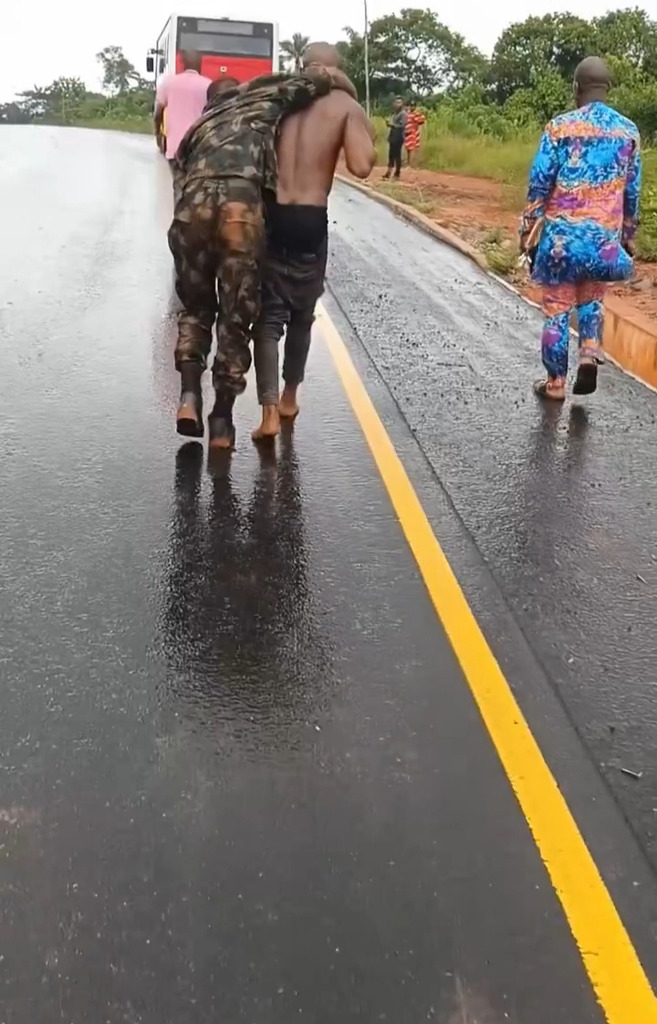
Several soldiers sustained injuries. Within moments, ordinary Nigerians — commercial motorcyclists, bus passengers, and passersby — stopped their journeys and rushed to help. They lifted the muddy, shaken soldiers into civilian vehicles and public buses, ferrying them for emergency medical care.
In one of the rescue buses, passengers assisted an injured soldier as he tended to his wounds and removed his mud-clogged boots. Another soldier stood guard near the wreckage, coordinating with the civilians.
The exact number of casualties remains unconfirmed, though early reports indicate at least two soldiers suffered serious injuries. What is clear is the spontaneous response of everyday people who put humanity first.
In a country where military-civilian relations can sometimes feel strained, moments like this quietly remind us of something simple and powerful: when lives are on the line, many still choose to help.