

The Federal Government on Wednesday defended its $21.7bn supplementary external borrowing plan submitted to the National Assembly, describing it as a strategic investment programme rather than debt accumulation.
It revealed that the administration it succeeded had printed over N30tn, equivalent to more than $20bn at the time, and the country is still absorbing its inflationary impact.
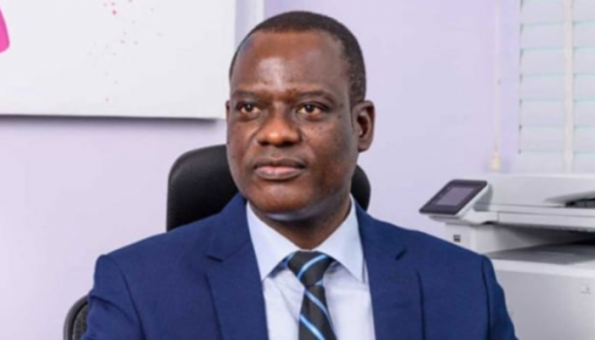
The Minister of Finance and Coordinating Minister of the Economy, Taiwo Oyedele, made the claim when he briefed State House correspondents after the Federal Executive Council meeting presided over by President Bola Tinubu at the State House, Abuja.
Oyedele, who spoke on the state of the economy, had presented 10 memos, all of which were approved by the council.
The first, he said, was a €155.9m credit facility from Deutsche Bank and other banks to upgrade 132/33kV substations under the Presidential Power Initiative Phase One, which he said would improve power reliability for homes and businesses and lower energy costs. The second was a $970m syndicated term loan from Standard Chartered and the Africa Finance Corporation for rolling stock on the Karu–Maradi rail line, intended to boost freight, regional trade, and the Northern Economic Corridor while reducing logistics costs.
The third was a €76.8m credit from the ECOWAS Bank for Investment and Development to Bauchi State for a transport infrastructure development programme, covering rural and urban roads and farm-to-market access routes to support food security.
The fourth was an approval for non-intrusive inspection scanners for the Nigerian Customs Service to speed up cargo clearance, reduce smuggling and misdeclaration, and intercept contraband and small arms.
He explained, “As I said, there were 10 of them. I’ll just briefly speak to about four of them. One of them was a 155.9 million euro credit from Deutsche Bank and some other banks directed at upgrading about 132/33 kV substations and a few other ones. There are five of them, actually, five new ones under the Presidential Power Initiative Bash One. Essentially, this is a government intervention that will help ensure more reliable power for homes and businesses and lower energy costs.
“Another memo was with respect to a $970m syndicated term loan by Standard Chartered Africa Finance Corporation on rolling stock for the Karu-Maradi rail line. What is the essence of this? This will give us shipper freight, regional trade, the Northern Economic Corridor and lower prices for logistics, inflation and price levels.
“Another one was 76.8 million euros. This is from the ECOWAS Bank, and it is credit to Bauchi State for the Transport Infrastructure Development Programme, and this is going to help us with rural and urban roads, and to build farm-to-market access roads that will help with food security.
“And finally, council approved the investment in a non-intrusive inspection scanner for technical support, repairs, and maintenance to the Nigerian Customs Service. What is the essence of this? It will help with faster cargo clearance, less smuggling, and less misclassification. And we can then detect when some evil people want to bring in contraband and dangerous small weapons to our country.”
On the $21.7bn supplementary external borrowing plan, obtained by our correspondent from a presidential aide, Oyedele pushed back against critics who had described it as debt, insisting that the Tinubu administration was simply investing in critical infrastructure.
“So, another part of this presentation is on the borrowing plan that was presented to the National Assembly. Altogether, if you convert the euro amount and add it to the dollar amount, it comes to $21.7bn. And we’ve seen some people with commentary saying that we are borrowing X, Y, Z.
“I’m pleased and excited to inform you that actually this does not qualify as borrowing. This qualifies as investment, and I will explain that to you in the next few minutes. Now, so what is this all about? This is an amount or a plan.
“First and foremost, this is a plan. It doesn’t even mean that we borrow all of it. So it’s a plan. The average lifespan of the project under this plan is five years, by the way. So, this means countries need to plan. You can’t be doing everything based on spontaneity and randomness. Now, these amounts, about $10.6bn out of it, are for investment in transportation infrastructure,” he explained.