

UMUAHIA – Former Speaker of the Abia State House of Assembly and APC House of Representatives candidate for Ikwuano/Umuahia Federal Constituency, Rt. Hon. Chinedum Enyinnaya Orji, has described Seyi Tinubu and the City Boy Movement (CBM) as driving a deliberate effort to institutionalize youth participation in governance and nation-building.
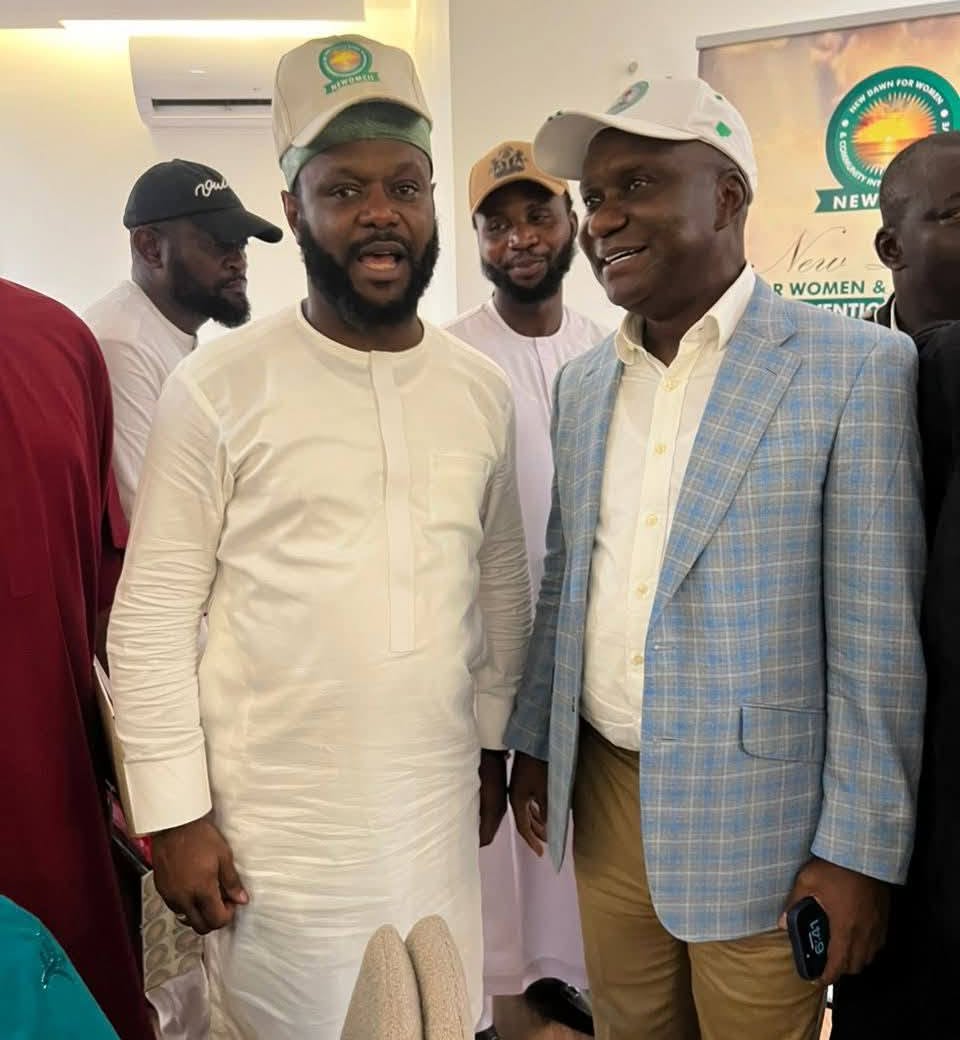
In an article titled “Seyi Tinubu and the City Boy Movement: Building a New Architecture for Nigerian Youth in Politics and Nation-Building,” Orji argued that what began as a 2022 campaign vehicle has since evolved into a structured, solution-driven political organization with a presence across the 36 states and the Federal Capital Territory.
According to Orji, the movement offers a third lane for youth engagement beyond protest and apathy: organized, institutional, and solution-driven participation.
He noted that Seyi Tinubu, the movement’s convener, has defined its mission as “reconnecting Nigerians with government” through advocacy with responsibility—explaining policy, listening to feedback, and carrying both back to Abuja.
“For too long, youth engagement in Nigeria oscillated between protest and apathy. The City Boy Movement offers a third lane: organized, institutional, and solution-driven participation,” Orji wrote.
The former Speaker said the movement has moved from a loose WhatsApp group to a formal structure with a National Working Committee, State Directors, and representation down to zonal, local government, and ward levels.
He argued that this structure creates accountability and provides a pathway for young Nigerians to rise through service rather than slogans.
On governance communication, Orji said the movement is positioning itself as a buffer between policymakers and citizens, particularly on reforms like subsidy removal and naira flotation.
“The directive from its Patron was clear: engagement must be ‘responsible, factual and compassionate.’ That is a maturity we rarely demand of youth politics, and it is changing the tone of conversations in markets, campuses, and wards,” he wrote.
Orji also highlighted the movement’s visible participation in community engagement, including free medical outreaches, campus visits, and nationwide food distribution during Ramadan and Lent.
He said the movement has also delivered direct empowerment through grants, business support, and tools for thousands of young Nigerians, citing Ogun State as an example where ₦500,000 grants were given to 50 SMEs, ₦200,000 to 100 micro-businesses, and up to ₦5 million to tech innovation winners.
The APC chieftain further noted that the movement’s goal of mobilizing 10 million youth votes for 2027 is ambitious, but its method is instructive.
“The stated target of mobilizing 10 million youth votes for 2027 is ambitious, but the method is instructive: ‘real people, real members, real engagement and hard work at the grassroots,'” he wrote.
He said the movement is also breaking new ground through geopolitical outreach, particularly in the South-East, by testing whether youthful messaging can transcend old party lines.
“The goal is not to erase differences, but to create a national conversation where youth in every zone see themselves in the same project. That is nation-building work. It is slow, unglamorous, and necessary,” Orji stated.
He acknowledged criticisms that youth groups tied to power risk becoming echo chambers, but argued that the test for the City Boy Movement would be its ability to carry hard feedback upward as boldly as it carries policy downward.
“If the City Boy Movement sustains this model, it could leave behind more than votes. It could leave behind a template: how to institutionalize youth energy, communicate governance honestly, and turn relief into resilience,” he concluded.
Orji concluded that Nigeria needs “more builders than spectators,” expressing confidence that the City Boy Movement could become a lasting template for youth participation in governance and nation-building if it sustains its current model.