

Emmanuel Ezeh’s write-up berating the low debt profile of Ebonyi State tries to sound profound, but beneath the dramatic language lies a weak argument built on selective comparisons, speculation, and, most troublingly, a string of sweeping insults – arrogance dressed as analysis.
Let us be clear from the start: reducing a state’s domestic debt by over 80% is not an accident, and it is certainly not a sign of “low vision.” It is discipline. It is strategy. It is governance with a long-term lens.
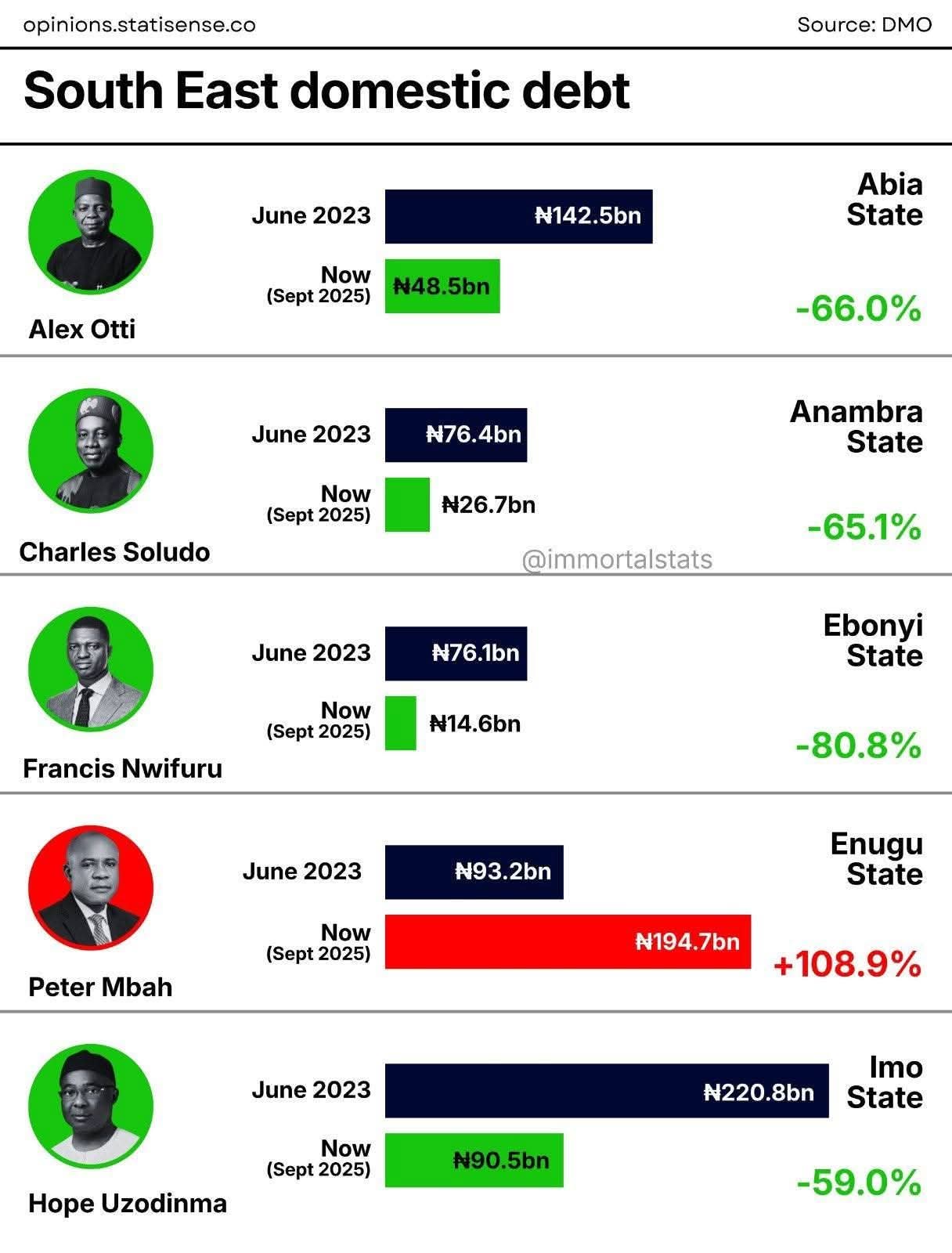
Under Governor Francis Ogbonna Nwifuru, Ebonyi State has deliberately cut its domestic debt from ₦76.1 billion to ₦14.6 billion. That is not “burying talent.” It is cleaning up a financial structure so that future investments are sustainable, not suffocating. Debt is not development; the productive use of resources is.
Ezeh asks, “Low debt for what?” The better question is: should a government recklessly borrow just to impress political commentators like him? Because that is what his argument implies – that the visibility of projects must come at the cost of fiscal stability. That thinking is exactly how states get trapped in cycles of debt servicing, where salaries, pensions, and basic obligations become burdens. You cannot build lasting development on a foundation of fiscal irresponsibility.
Now to the comparisons.
Dragging Abia, Anambra, Imo, and Enugu into this conversation without context is not only amusing but intellectually lazy – like a man struggling to be heard at all costs. Now that he has been heard, let me say this: every state has its own fiscal history, revenue base, and structural realities. Governance is not a beauty pageant; it is about priorities. Ebonyi’s priority under Nwifuru has been to stabilize, consolidate, and then expand – not to mortgage the future for applause today.
And that brings us to the most unfortunate part of Ezeh’s piece – his description of the entire state cabinet as being “driven by appetite” and “timid.”
That is not criticism; that is a careless insult to the entire state.
You do not get to dismiss a whole cabinet of public officials as timid simply because they do not align with your political leanings. Governance is not built on your approval; it is built on responsibility and results.
And frankly, that kind of statement exposes a deeper problem. When a person convinces themselves that they alone are intellectually superior while others are “timid,” it often breeds arrogance, alienation, and a dangerous blind spot. It leads to dismissing opposing views, straining relationships, and ultimately failing to recognize one’s own errors. That is not intellectual depth; it is intellectual isolation.
This is a troubling red flag for anyone who aspires to leadership. When a voice comes across as inciting and divisive, it raises legitimate concerns about how power might be exercised if ever entrusted to such hands. Leadership demands restraint, balance, and the ability to unite – not language that deepens division.
Now, beyond the noise, let’s deal in facts – because that is where his argument collapses.
This administration has made serious, measurable investments in people and systems: over 300 Ebonyians are currently on fully funded postgraduate scholarships in the UK, with over 500 others studying in Nigerian universities. That is not “low vision”; that is building a generation of globally competitive professionals. General hospitals across the state have been equipped with modern medical facilities, complemented by the employment of medical personnel, improved doctors’ allowances, and the provision of brand-new ambulances to ensure real functionality – not empty structures. Gratuities dating back to 1996 have been cleared, restoring dignity to retirees who were ignored for decades. Over 1,700 Ebonyians have been employed into the state civil service, putting livelihoods in homes and strengthening the workforce. Investments are evident in water resources, infrastructure and the revitalization of key state facilities – the Pipe Production Industry, Trade Centre, Ebonyi State Hatchery, Ebonyi State Fertilizer and Chemical Company, and more.
These are not theoretical projections; they are real policies with real impact.
Leadership is not noise. It is not about who borrows the most or announces the biggest figures. It is about making decisions that secure the future of the people – and that is exactly what is happening.
Ezeh romanticizes borrowing as if it were a badge of competence. It is not. Real competence lies in knowing when to borrow, how to borrow, and when not to borrow at all. Ebonyi State is choosing caution over recklessness, structure over spectacle, and sustainability over short-term validation.
There is a difference between vision and vanity. One builds quietly and lasts; the other makes headlines and collapses under pressure.
Ebonyi is choosing the former.
So no, this is not a crisis of vision. It is a transition – one that prioritizes stability today so that growth tomorrow is real, not borrowed.
©️ Leo Ekene Oketa
Special Assistant to the Governor
(New Media)
April 22, 2026.