

The African Union’s (AU) human rights body has rejected claims that South Africa is inherently xenophobic despite the resurgence of anti-foreigner sentiment in the country this year.
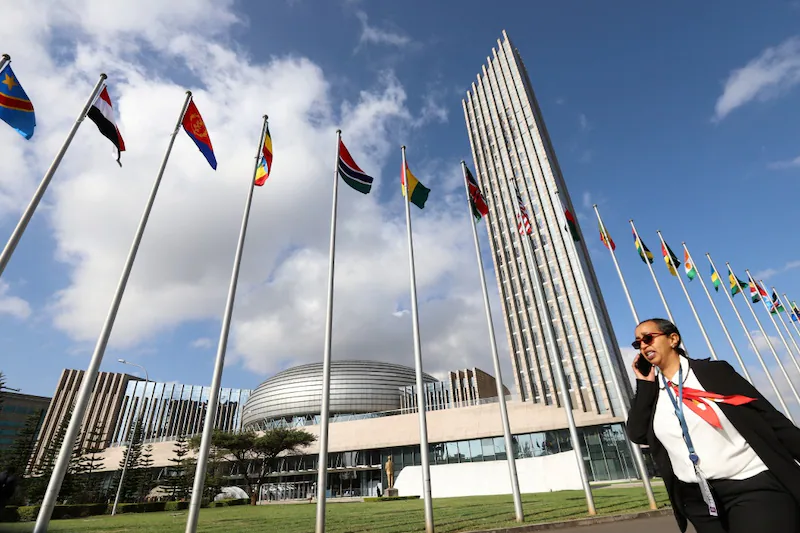
While commending the government’s efforts to control threats against foreign nationals, the African Commission on Human and Peoples’ Rights (ACHPR) decried the lack of accountability against groups and individuals involved in vigilantism, as well as their financiers, and the slow pace of investigation and prosecution of acts of violence, including those that led to loss of life, injury, and destruction of property and sources of livelihoods.
A diplomatic spat unfolded earlier this year following a wave of anti-immigrant protests in South Africa that targeted African foreign nationals, prompting mass evacuations and rebukes from Nigeria and Ghana.
The two countries not only condemned the attacks as “Afrophobia”, but they also pressed the AU to place the crisis on its summit agenda – but the proposal failed.
This week, an ACHPR’s multi-national delegation led by Commissioner Solomon Ayele Dersso rejected any suggestion that South Africa is inherently xenophobic or Afro-phobic or unique in experiencing incidents of xenophobia or Afrophobia.
They further rejected “the recurrence in 2026 of similar incidents of xenophobic and Afro-phobic attacks of earlier years that particularly affected nationals of other African States in South Africa, taking the form of anti-immigrant protests and community mobilisation, incidents of violence, intimidation and discrimination resulting in loss of lives, destruction of property and sources of livelihoods, separation of families, and displacement”.
The delegation was in South Africa on a five-day mission, from September 28 to October 2, to discuss the state of human and peoples’ rights in the country, including current human rights issues such as reports of xenophobic and Afro-phobic violence and acts of intimidation against foreign nationals, particularly nationals of other African states in South Africa.
In conducting its work, the team met with government representatives including National Assembly Speaker Thoko Didiza, heads of Chapter 9 institutions, civil society organisations, the media, and other actors involved in the promotion and protection of human and peoples’ rights in the country. It also visited the Emthonjeni Youth Centre, which is a detention centre for juvenile offenders, and the Lindela repatriation centre.
It commended recognition by the government of human rights issues arising from the various acts targeting foreign nationals, particularly those from other African States, including anti-foreign national protests, incidents of violence, intimidation and discrimination against foreign nationals, and the emergence of vigilantism purporting to enforce immigration laws and preventing access to critical services.
The delegation also commended the government for providing protection to and facilitation of support for those forced to flee. It further commended government for beefing up proactive law enforcement, as was undertaken ahead of the June 30 deadline set by “vigilante actors”.
It praised the recent adoption of the five-point plan announced by President Cyril Ramaphosa as a comprehensive approach for managing migration.
The mission, however, highlighted concerns about “instances of politicisation of the legitimate grievances of South Africans with respect to poor access to services and challenges to employment opportunities and operation of small businesses leading to the scapegoating of non-nationals, which in settings of informal settlements and marginalised neighbourhoods where nationals from other African States live in large numbers, trigger mobilisation and attacks”.
It noted the emergence of acts of seemingly financed and politicised vigilantism with actors and individuals that are not part of law enforcement purporting to enforce the law by demanding identification of nationality of people and blocking access to services, notably health and education, to those suspected of being non-nationals, undermining the rule of law.
It called on the government to add, as a stand-alone pillar, adherence to human rights and the principles of dignity and non-discrimination to the five-point plan on migration and ensure the representation of the South African Human Rights Commission in the deliberation of and the design and implementation of measures by the Inter-Ministerial Committee on Migration.
Ramaphosa announced a five-point plan for migration management in June to tackle irregular immigration, strengthen government systems, and address public frustrations while warning against vigilantism and xenophobia.
This followed rising public tensions, protests, and community frustration over high unemployment, poverty, and illegal immigration.