

In the dead of night, a Ukrainian drone crossed the front line in northern Donetsk, one of a hundred or so to pass overhead that day.
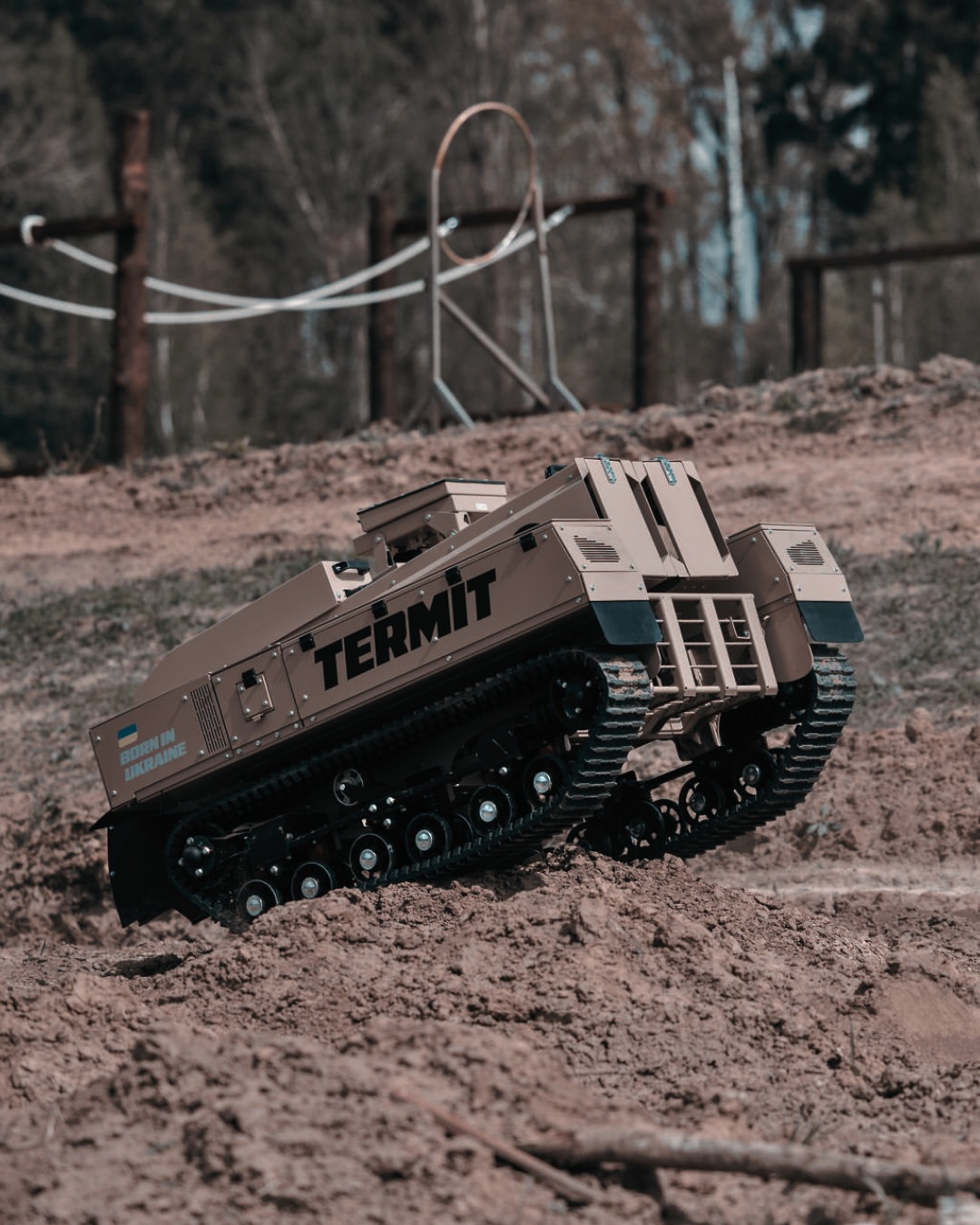
But this was no ordinary drone: a second machine was hanging beneath it, a small robot on wheels, packed full of explosives.
The carrier drone flew on past the last Ukrainian positions, at least 10 miles into Russian-held territory, before dropping its cargo to the ground.
There, the remote-controlled vehicle sprang into action, tracking down Russian soldiers lying in wait to attack Ukraine, before detonating its payload.
The 3rd Army Corps had eliminated a deadly trap, but not one pair of boots had touched the ground.
The unit’s commander told The Telegraph that no other army had air-dropped ground robots behind enemy lines until now.
The feat – part of a top secret offensive known as Operation Vivaldi – had helped Ukraine kill 3,000 Russians in a matter of months, recovering 48 square miles of occupied Ukraine, the 3rd Army Corps said.
But the drop was the easy part: getting one machine over the line took jamming, artillery and darkness, a glimpse of how far Ukraine will go to keep its infantry off the ground.
“This drone, it has no fear, and unlike men, we are not afraid to lose it,” said Darwin, commander of the 2nd Mechanised Battalion of the 3rd Army Corps. “It makes the war safer for our soldiers.”
Unmanned ground vehicles (UGVs) are remote-controlled robots on wheels or tracks.
Most are unglamorous: small flatbed machines that carry ammunition, food, batteries and wounded men along routes too dangerous for people.
Others – such as the ones deployed by the 3rd Army Corps – are fitted with heavy machine guns, or packed with explosives and driven into Russian positions.
Getting the UGV – known as Gryphon to Ukrainian soldiers – over the line in Donetsk was the difficult part, Darwin explained.
A drone big enough to lift a robot is large enough for Russian troops to see, and a machine gun is enough to bring it down.
So Darwin’s team set about making it invisible.
Electronic warfare was used to jam Russian reconnaissance drones, so the crews watching that stretch of front could not see what was moving across it.
Ukrainian drones and artillery struck Russian infantry positions to force the men there into cover, where they could not shoot upwards. The flights went in under the cover of night.
“The most difficult part is to reach the point where you should lift the drone,” Darwin said. “We use radio electronic warfare to blind their drones, and they cannot see what we are doing any second.”
Darwin, commander of the 2nd Mechanised Battalion of the 3rd Army Corps, said the remote-controlled robots ‘make the war safer for our soldiers’
The difficulty is that almost nothing on this front moves unobserved.