

By Samson Ezea
In a country where leadership is often measured by the size of one’s political structure, the number of followers one commands, or the material wealth one accumulates, the emergence of Peter Ogbonna Eze presents a refreshing and compelling alternative.
His story is a powerful reminder that leadership is not necessarily about age, noise, flamboyance or the length of time spent in office; it is about impact, character, vision, service and the capacity to positively transform the lives of others.
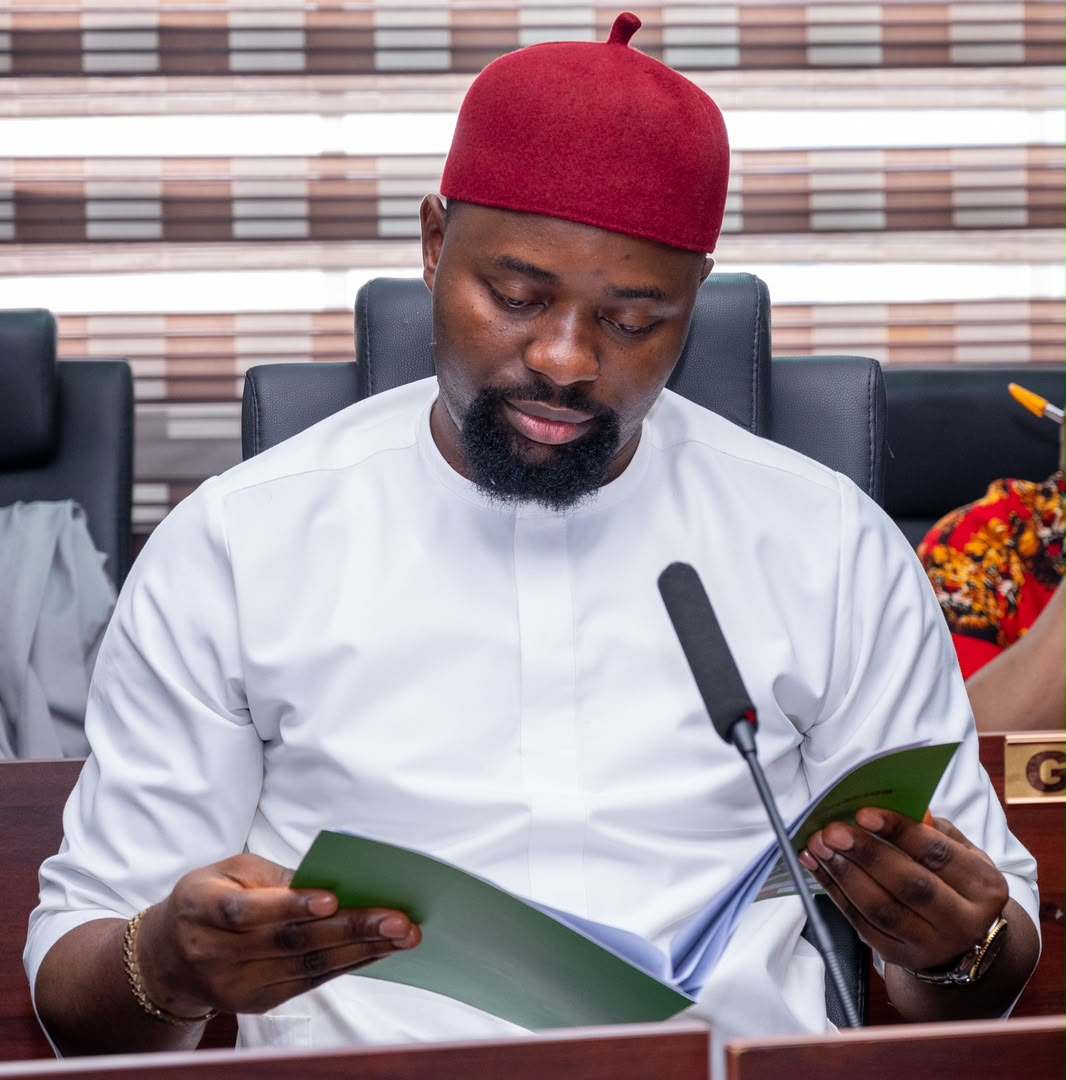
Until recently, the name Peter Ogbonna Eze was not widely known beyond his immediate political and professional circles. The young man from Igbo-Eze North Local Government Area of Enugu State was largely known as a Personal Aide to the former Governor of Abia State and Senator representing Abia North Senatorial District, Senator Orji Uzor Kalu.
Quiet, dynamic, focused, unassuming and urbane, with a consistent and infectious smile, Peter Eze gradually distinguished himself as a dependable and valuable aide. In him, Senator Orji Uzor Kalu saw an asset worth nurturing, trusting and empowering.
Their relationship has evolved beyond the conventional employer-employee arrangement. It is symbiotic and mutually beneficial, resembling that of a father and son, mentor and protégé. This is largely because Senator Orji Uzor Kalu has consistently demonstrated a remarkable capacity to identify talent, nurture young people and create opportunities for them to excel.
Indeed, Senator Kalu’s political and business trajectories have shown that he understands the importance of human capital development. Over the years, he has empowered, elevated and positioned numerous young Nigerians from different ethnic and political backgrounds, without allowing tribal considerations or personal interests to become barriers.
This culture of identifying and empowering people is arguably one of the reasons Senator Kalu has remained politically relevant, visible and influential years after leaving the Abia State Government House in 2007. At a time when many of his contemporaries have disappeared from the political landscape, he has continued to maintain a significant presence in the affairs of the nation.
It was therefore neither surprising nor accidental that, after working with Peter Eze for a relatively short period, Senator Kalu recognised his potential and helped position him for greater responsibilities.
Eventually, Mr. Eze was appointed as the Federal Character Commission representative for Enugu State, following his nomination by President Bola Ahmed Tinubu and subsequent confirmation.
Since assuming office, Peter Eze appears to have embraced the responsibility with seriousness, energy and a determination to make a difference.
Through his activities, interventions and engagements, he has demonstrated that his emergence was not a mistake or a mere political appointment. Rather, he has continued to justify the confidence reposed in him.
His approach has reportedly included youth empowerment, facilitation of employment opportunities, support for young people seeking professional and international exposure, facilitation of foreign seminars and other interventions targeted at improving the lives and prospects of his constituents and people around him.
He has also been associated with infrastructural intervention, including the construction of a road in his community.
Across Enugu State and beyond, testimonies, commendations and expressions of appreciation continue to emerge around his leadership style and interventions. Whether one agrees with every aspect of his approach or not, one thing is increasingly difficult to ignore: Peter Eze has become a name worthy of attention in the conversation about emerging leadership in Nigeria.
For months, I have followed Mr. Eze’s activities with keen interest and attention. I have not only been impressed; I have also been challenged and encouraged.
His example reinforces my belief that Nigeria’s leadership problem is not necessarily a shortage of capable young people. Rather, one of our greatest challenges is the unwillingness of many established leaders to identify, trust, empower and give young people the opportunity to serve unhindered.
There are countless talented, intelligent, patriotic and capable young Nigerians scattered across our communities. What many of them lack is a Senator Orji Uzor Kalu who will discover them, believe in them, mentor them and provide them with the platform to demonstrate what they can do.
That, perhaps, is one of the most important lessons in the Peter Eze story.
A good mentor does not create a clone of himself. A good mentor creates opportunities for others to become the best version of themselves.
My personal encounter with Mr. Eze finally came at the reception organised for my boss, Senator Ikeje Asogwa of Enugu North Senatorial District, in Abuja following his swearing-in on June 24, 2026.
I was serving as the Master of Ceremonies at the event when Mr. Eze quietly and unassumingly walked into the venue.
Upon sighting him, I immediately announced his presence and highlighted some of the remarkable interventions and achievements associated with his relatively short period in office.
Interestingly, many people at the event, including Mr. Eze himself, appeared surprised that I knew so much about his activities. But then, a golden fish has no hiding place.
When a person is genuinely making an impact, people will notice. When service is producing results, stories will travel. And when leadership is touching lives, recognition will eventually come, whether the person seeks it or not.
Some may argue that it is too early to celebrate or commend Mr. Eze’s leadership, considering the relatively short period he has spent in office.
I respectfully disagree.
While longevity in office can provide more opportunities to assess a leader, impact does not always require decades.
Morning, they say, shows the day.
The early signs of a leader’s character, priorities and philosophy often provide a window into what can be expected in the future.
A leader who genuinely cares about people will demonstrate it early. A leader who values empowerment will begin empowering people early. A leader who understands service will not wait until the end of his tenure before making an impact.
Peter Eze’s example demonstrates that a leader can achieve meaningful things within a short period when driven by altruism, patriotism, conscientiousness, compassion, sincerity and a genuine desire to serve.
Conversely, leadership failure is often aggravated by greed, corruption, selfishness, primitive accumulation and an obsessive pursuit of material wealth at the expense of public good.
Mr. Eze’s disposition to leadership appears to be challenging some of the conventional assumptions about political leadership and youth participation.
There are many Peter Ezes across Igbo-Eze North, Enugu State and Nigeria, young people with ideas, energy, competence and the capacity to make a difference.
The real question is:
Who will discover them? Who will mentor them? Who will give them opportunities? Who will trust them enough to allow them to serve?
Unfortunately, some political leaders recruit young people only to control them. They demand absolute loyalty, but offer little opportunity for growth. They want followers, not successors; praise-singers, not thinkers; dependants, not independent leaders.
That is not empowerment.
True empowerment is the ability to give someone a platform and allow that person to grow beyond the limitations of the person who provided the platform.
This is where the relationship between Senator Orji Uzor Kalu and Peter Eze becomes instructive.
The Kalu-Eze Leadership Model
The story of Senator Orji Uzor Kalu and Peter Ogbonna Eze deserves to be studied by political leaders who genuinely desire to build a sustainable leadership structure.
Senator Kalu identified a young man, recognised his potential, gave him an opportunity, exposed him to leadership, trusted him with responsibility and ultimately helped position him for a larger national assignment.
And Peter Eze appears to be using that opportunity to create opportunities for others. That is how leadership should reproduce itself.
A leader’s greatest achievement is not how many people remain dependent on him, but how many people become capable because of him.
This is why the increasing interest of political leaders and personalities in associating with Mr. Eze is noteworthy. I sincerely hope that their interest is motivated by a desire to learn, collaborate and advance the public good, not merely by political calculations.
If they are truly paying attention, there is much to learn from his emerging leadership model.
Meanwhile, leadership should never be measured merely by the quantum of wealth accumulated, the number of political associates around a person, the size of one’s convoy or the offices one occupies.
The real measure of leadership is impact.
How many lives have you changed?
How many young people have you empowered?
How many people have you helped discover their potential?
How many opportunities have you created for others?
What institutions have you strengthened?
What infrastructure have you facilitated?
What legacy will remain when the position is gone?
These are the questions that ultimately separate leaders from office holders, statesmen from politicians, and builders from mere beneficiaries of power.
The story of Peter Ogbonna Eze and Senator Orji Uzor Kalu is more than a story about a politician and his aide. It is a case study in leadership recruitment, mentorship, trust, empowerment and succession building.
Senator Kalu demonstrated that leadership is also about identifying potential in others and creating the environment for that potential to flourish.
Peter Eze, in turn, is showing that the best way to honour an opportunity is to use it to create opportunities for others.That is the cycle Nigeria desperately needs.
There are thousands of young Nigerians with the capacity to change their communities and contribute meaningfully to national development. What they need is not perpetual subordination, but mentorship; not political enslavement, but genuine empowerment; not empty promises, but opportunities.
Leadership is not about how high you climb alone. It is about how many people you lift as you rise.
Nigeria does not lack Peter Ezes. Nigeria needs more Orji Uzor Kalus who will find them, trust them, mentor them and give them the opportunity to shine.
For, ultimately, the greatest legacy of any leader is not the wealth he acquires, the office he occupies or the power he wields, but the quality of people he discovers, develops, empowers and leaves behind.
That is the leadership question. And Peter Eze may just be providing one of the answers.
Ezea writes from Independence Layout, Enugu State