

In the face of an energy crisis caused by the war in Iran, the Conservative Party leader hit out at Labour for shutting down the North Sea and refusing to issue new oil and gas licenses.
She compared Britain to the Nigeria of her childhood, suggesting that the Government’s focus on net zero risked Britain’s energy security.
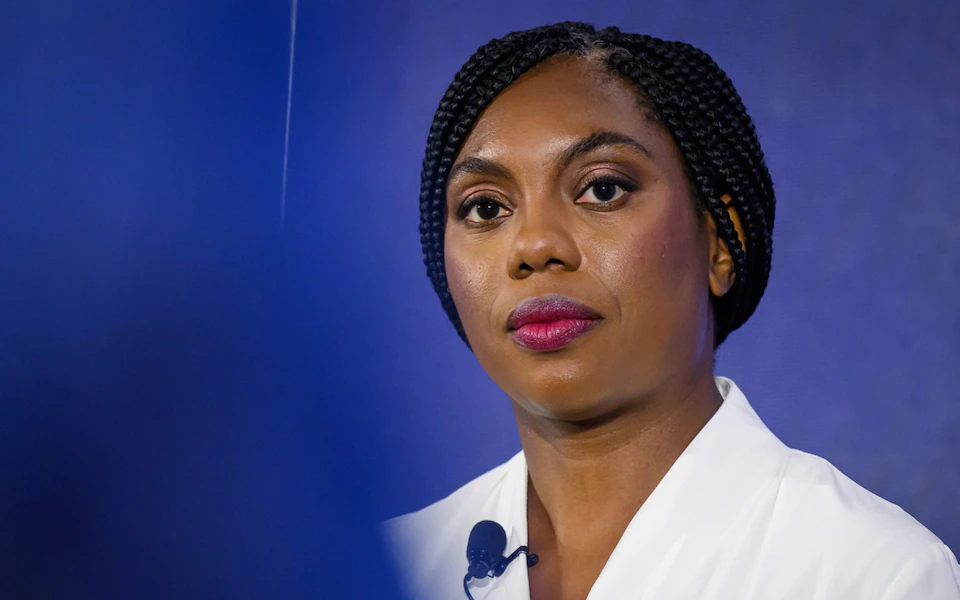
Writing for The Telegraph, Mrs Badenoch said: “Energy is growth. I grew up in a country rich with oil – but because Nigeria’s leaders made bad policy choices it never lived up to its full potential, instead it was hampered by unreliable electricity and regular fuel shortages.
“Britain is now making similar mistakes. It astonishes me to see Labour considering subsidies as the first option instead of drilling our own oil and gas and cutting the green taxes deindustrialising the UK.”
Mrs Badenoch also attacked Ed Miliband, the Energy Secretary, whom she accused of “effectively running the Government” and using his power to push “illogical” and “dangerous” net zero dogma.
She claimed Sir Keir Starmer’s weak leadership on the Iran war meant that the Prime Minister had “no say or seat at the table”, leaving Britain “hostage to forces we cannot control”.
“We can only guarantee our security and prosperity in an unstable world if we produce our own cheap, reliable energy,” Mrs Badenoch added.
“Getting Britain drilling again is an economic double whammy, because it also creates jobs here in the UK. This is the difference between the Conservatives and other parties. Labour always reaches for more borrowing and handouts when the red lights start flashing.
“Reform make noise, but have done no serious work or planning and the Greens presumably think the country can run on vegetable oil. The Conservatives are the only party with a plan to fix Britain’s energy problems.”
A Government spokesman said: “Issuing new licences to explore new fields cannot give us energy security and will not take a penny off bills.
“Regardless of where it comes from, oil and gas is sold on international markets, which set the price for British billpayers – making us a price taker. The only way to truly protect ourselves from these price spikes is to get off the rollercoaster of fossil fuel markets.”
Mrs Badenoch’s comments came as one of the world’s largest airlines began taking fuel-saving measures as managers braced for the possibility that the price of oil could surge 60 per cent higher.
United Airlines said it was scrapping flights on less-profitable routes following a doubling of jet fuel prices since February.
Scott Kirby, the airline’s chief executive, said the moves were part of steps to prepare for a scenario in which oil hits $175 (£131) a barrel and remains above $100 through 2027.
That would push up United’s annual fuel bill by about $11bn – more than twice the company’s best-ever profit, Mr Kirby warned.
In a memo to staff, the chief executive said: “Honestly, I think there’s a good chance it won’t be that bad – but there isn’t much downside for us to preparing for that outcome.”
Mr Kirby said the moves aimed to ensure that the company was “in a stronger position” to react if oil prices remained elevated.
He added that United did not plan to furlough staff, defer aircraft orders or delay investments. The airline would have to “be smart and nimbly manage our schedule” to cut fuel spending, he said.
Delta Air Lines, United’s rival, has also said it is looking at cutting flights if fuel prices remain high.
Since late February – when the US and Israel launched strikes on Iran – the price of Brent crude has rocketed from $70 to $110 a barrel.
That has followed strikes on regional energy facilities and the Iranian closure of the Strait of Hormuz, a shipping chokepoint. This shutdown has locked huge amounts of oil and gas into the Gulf, and sent markets into a panic.
In response, United has begun trimming flights that are less busy and so have been rendered unprofitable by fuel price increases.
The airline has cut midweek, Saturday and overnight services as well as keeping services to destinations such as Tel Aviv and Dubai suspended. Overall, the cuts amount to about 5 per cent of the company’s total capacity.
American carriers are more exposed to jet fuel cost increases because, unlike many of their European counterparts, they do not tend to hedge. The companies have instead relied on raising fares and trimming capacity to cut costs.
So far, major airlines have said strong demand for flights is giving them room to do that. United said the first 10 weeks of this year were the strongest for bookings in its history.
But Mr Kirby said listening to his rivals at a recent conference had left him convinced that they were being complacent.
“Many said some version of ‘hope is our strategy’,” he said. “It’s possible they’re right and the war ends quickly. But if it doesn’t, this will be our opportunity.”