

Dangote Cement paid about N900 billion in taxes in 2025, President Bola Ahmed Tinubu said yesterday.
He said Dangote Industries generates more energy than many Nigerian states, which is a plus for the African continent.
President Tinubu spoke when he unveiled the Nigeria Industrial Policy 2025, where he reaffirmed the Federal Government’s pride in Nigeria’s manufacturing sector.
The President, represented by Vice President Kashim Shettima, said the government appreciates manufacturers who generate their own power and remain committed to national development.
President Tinubu said: “Dangote generates more energy for its industries than many Nigerian states, which is a plus for the African continent.
To occupy more than the margins in this present wave of industrial revolution, we must put in place infrastructure to compete with the rest of the world.
“This planning has led the country to unveil the Nigerian Industrial Policy 2025.”
implementation as the Federal Government moves to re-engineer the nation’s industrial base and place production, competitiveness and jobs at the centre of economic strategy.
He said the new policy has a clear implementation architecture, stressing that policies rarely fail at conception but at execution
He lamented that for too long Nigeria has struggled with fragmented value chains, high production costs, infrastructure gaps, policy inconsistency and weak coordination between government and industry.
“This stops now,” the President declared, describing the Nigeria Industrial Policy 2025 as an acknowledgement of those deficiencies and a roadmap for unlocking value across sectors.
“This administration will not measure success by the number of documents we produce, but by the number of factories that open their gates at dawn, the jobs created for our young men and women, the exports that leave our ports bearing the mark of Nigerian excellence, and by the value retained within our own economy,” he said.
Outlining the policy’s core priorities, President Tinubu said it would focus on strategic sectors anchored on Nigeria’s comparative and competitive advantages, while advancing value chain development to move the country from exporting raw materials to producing finished goods.
He said the policy also integrates micro, small and medium enterprises into the heart of industrial growth “because prosperity must not be exclusive,” while aligning infrastructure and energy with industrial ambition.
Dangote predicts N1,000 /$100 in 2026
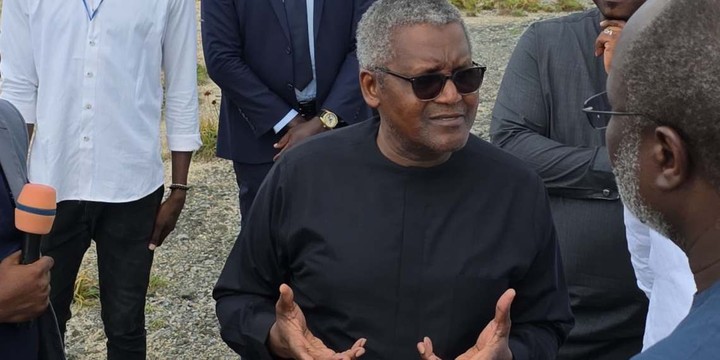
President of Dangote Group, Aliko Dangote, lauded the Federal Government for introducing what he called a progressive industrial policy.
Dangote said Nigeria is the only country in Africa where the private sector is bigger than the government, adding that domestic manufacturers were pleased with the direction of the Tinubu administration.
He expressed confidence that the naira would strengthen further this year, saying: “The naira, this year, will be at N1,000 to $100.”
Dangote noted that many investors were willing to invest in Nigeria due to foreign exchange stability and other reforms, but stressed that the protection of indigenous industries remained critical.
“If there is no protection, there is no way any industry will thrive here,” he said.
He believes the cycle of exporting raw materials and importing finished goods must end.
He said the Tinubu administration had chosen to confront Nigeria’s structural economic challenges head-on through macroeconomic reforms, clearer regulations, investor engagement and infrastructure development, adding that the groundwork for real industrial growth was already being laid.
“Since its soft launch at the Nigeria Economic Summit Group 2025 Macroeconomic Outlook, one message has been clear: industrialisation is no longer optional; it is central to Nigeria’s future.
“It will require reviving dormant factories, developing industrial clusters, strengthening value chains, and processing more of our natural resources at home,” Dangote said.
Minister of State for Industry, Senator John Owan Enoh, said the launch marked a turning point aimed at building an industrial Nigeria that produces, competes and prosper
He said industrialisation was no longer a distant aspiration but a disciplined national priority.
According to him, the Nigerian Industrial Policy 2026 represents the government’s structured response to that call, noting that past industrial efforts were carefully reviewed, including their promise, progress and limitations.
United Nations Resident and Humanitarian Coordinator in Nigeria, Mr. Mohamed Malick Fall, said the launch of the policy signalled that Nigeria was stepping into a future where hope is turned into action, resulting in inclusive economic growth.
Fall explained that the policy was the outcome of an ongoing partnership between the United Nations Industrial Development Organisation (UNIDO) and Nigeria, aimed at transforming the country into a beacon of prosperity and a key player in regional and global value chains.
President of the Manufacturers Association of Nigeria (MAN), Otunba Francis Meshioye, said manufacturers were focused on effective implementation.
He backed the promotion of indigenous entrepreneurship contained in the policy and assured that MAN would give full support to ensure its successful implementation.
The Nigeria Industrial Policy 2025 is expected to serve as the Federal Government’s new industrial blueprint, with emphasis on execution, coordination, competitiveness and value retention within the Nigerian economy