

The Nigeria Correctional Service (NCoS) has earmarked N14.83 billion in its 2026 budget proposal to feed an estimated 91,100 inmates nationwide, amid growing pressure on custodial facilities driven largely by a high population of awaiting trial inmates.
Controller-General of the Service, Sylvester Nwakuche, disclosed this on Wednesday while presenting the agency’s 2025 budget performance and 2026 estimates before the House of Representatives Committee on Reformatory Institutions in Abuja.
According to Nwakuche, the feeding provision is based on a daily rate of N1,125 per inmate and forms part of a proposed N50.40 billion recurrent overhead expenditure in the 2026 fiscal year.
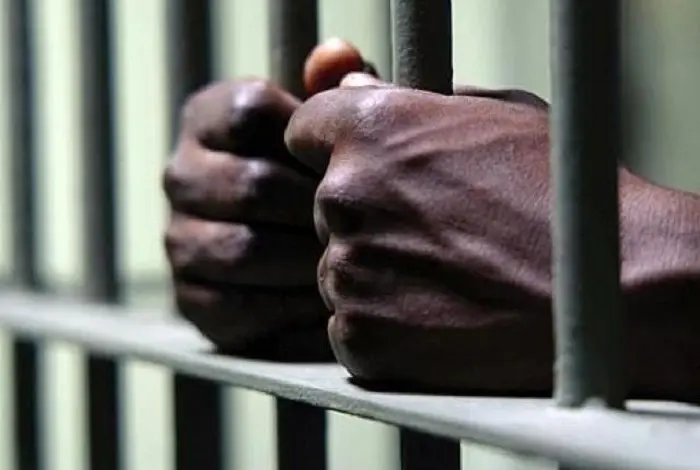
He said the pressure on feeding resources reflects the current inmate population profile, noting that awaiting trial inmates make up 64 per cent of the total custodial population across the country.
He said as of February 9, 2026, the total number of inmates stood at 80,812, out of which 51,955 were awaiting trial, 24,913 were convicted inmates, while 3,850 fell under other detention categories.
The Controller-General stressed that the Service is mandated to provide adequate nutrition to inmates in line with the United Nations Minimum Standard Rules for the Treatment of Offenders, describing inmate feeding as a critical but resource-intensive obligation.
Reviewing the 2025 budget performance, Nwakuche revealed that the Service received a total appropriation of N184.63 billion. Of this, N27.28 billion, representing 71.7 per cent of released overhead funds was spent on inmate feeding nationwide, while outstanding liabilities for food rations stood at N10.75 billion.
He added that recurrent overhead releases for 2025 stood at 73.7 per cent, with the final tranche for October released in December.
He said personnel costs in 2025 amounted to N124.31 billion, of which N112.68 billion, representing 90.6 per cent, was released and fully utilised for salaries, pensions and health insurance contributions under the Integrated Payroll and Personnel Information System (IPPIS).
He said operational expenses gulped N6.49 billion, covering staff training, fueling of operational vehicles for court duties, electricity supply, security services and facility maintenance.
He said capital expenditure recorded the weakest implementation, as only N3.22 billion out of the N14.50 billion appropriated—representing 22.2 per cent—was released, leaving N11.27 billion unreleased for projects nationwide.
Nwakuche explained that capital funding was essential for constructing and rehabilitating custodial centres, procuring operational vehicles, arms and security equipment, deploying ICT systems, capturing inmate biometrics and supporting agricultural activities in prison farm centres.
For 2026, the Controller-General presented a total budget proposal of N198.85 billion, covering personnel costs, inmate feeding, recurrent overheads, operations and capital expenditure for both custodial and non-custodial services.
Out of this, N138.30 billion was proposed for personnel costs to cater for a projected staff strength of 37,541 operating under four salary structures.
He further appealed for an additional N90.38 billion to significantly boost capital funding, raising the total capital allocation to about N100.50 billion in order to address longstanding infrastructure deficits and capacity gaps across correctional facilities.
Nwakuche also requested a dedicated provision of N37.99 billion to support the effective implementation of non-custodial measures across the 774 local government areas of the country.
Earlier, chairman of the House Committee on Reformatory Institutions, Hon. Chinedu Ogah, called for urgent reforms in Nigeria’s correctional system, citing chronic underfunding, aging infrastructure and rising operational demands such as inmate feeding.
Ogah described the Nigeria Correctional Service as central to national security but lamented what he termed inadequate budgetary attention, noting that many custodial centres were built over a century ago and have deteriorated significantly.
“Our core duty here today is the budget defence of the 2026 Appropriation as presented by President Bola Ahmed Tinubu,” he said, assuring that the committee would closely examine both the Service’s 2025 performance and its funding needs for 2026.
The lawmaker urged the President to assent to the Correctional Service Trust Fund Bill already passed by the National Assembly, saying it would ease pressure on federal facilities by empowering states to establish correctional centres.
He also highlighted efforts to expand educational access for inmates, revealing that about 10 study centres of the National Open University of Nigeria have been established within custodial facilities nationwide, including one at the Abakaliki Correctional Centre offering free programmes to inmates.
While commending correctional officers for sustaining operations under difficult conditions, Ogah said the committee would conclude deliberations on the 2026 budget after a thorough review of the Service’s submissions.