

Authorities in Jersey have agreed to repatriate more than $9.5 million (£7 million) in funds linked to corruption to the Nigerian government, marking another milestone in Nigeria’s long-running effort to recover assets looted during the military era.
The funds, described as proceeds of “tainted property”, are believed to have been stolen by the late former military head of state, Sani Abacha, who ruled Nigeria between 1993 and 1998. The money was held in a bank account on the island of Jersey and had been the subject of prolonged legal proceedings.
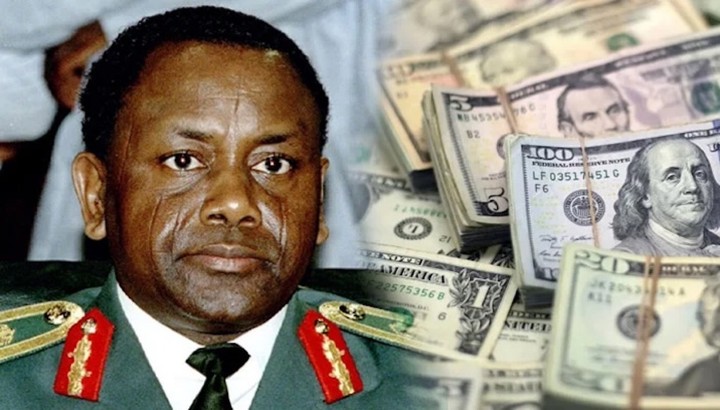
Although the assets were recovered during the administration of former President Goodluck Jonathan, legal challenges delayed their return to Nigeria for several years. The breakthrough came in December, when Jersey’s Attorney-General, Mark Temple, signed a memorandum of understanding (MoU) with the Nigerian government to facilitate the repatriation.
According to the BBC, the agreement builds on two previous arrangements between Jersey and Nigeria that resulted in the return of more than $300 million (£230 million) in recovered assets.
In a ruling delivered in January 2024, Jersey’s Royal Court held that the funds were “more likely than not” the proceeds of corruption. The court found that third-party contractors had diverted public funds for the benefit of senior Nigerian officials and their associates.
Nigeria’s Attorney-General and Minister of Justice, Lateef Fagbemi, welcomed the development, describing it as evidence of effective international cooperation against corruption. He said the recovered funds would be utilised strictly in line with the terms of the MoU.
“The successful recovery and repatriation of the forfeited assets underscores the effectiveness of Nigeria’s collaborative efforts with its international partners in ensuring that there is no safe haven for illicitly acquired wealth or assets moved to foreign jurisdictions,” Fagbemi said.
He added that the money would be channelled towards the final stages of a major highway project linking Abuja to Nigeria’s second-largest city, describing the road as a vital transport corridor.
Temple, on his part, said the repatriation demonstrated the strength of Jersey’s legal framework in combating corruption.
“The return demonstrates the strength of our civil forfeiture legislation as a powerful tool in the fight against corruption,” he said.
The latest recovery adds to a series of asset repatriations linked to the Abacha era, which continues to shape Nigeria’s anti-corruption efforts decades after the former leader’s death.