

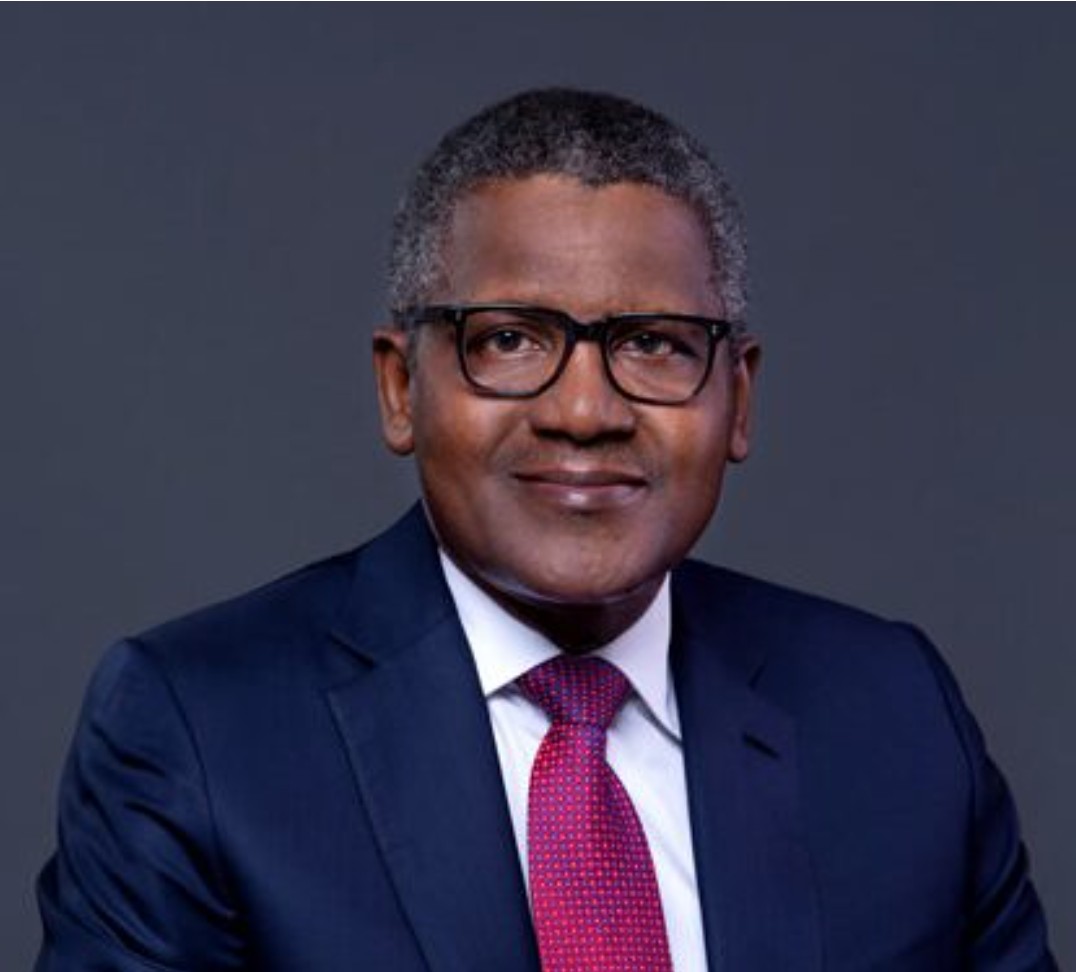
Aliko Dangote, head of the Dangote Group, has unveiled sweeping expansion targets that would see the conglomerate achieve a market capitalisation above $200bn and generate annual revenues of $100bn by the end of the decade.
The bold forecast comes ahead of plans to publicly list the group’s $20bn refinery on the Nigerian Exchange in 2026, a move expected to reshape the country’s investment landscape.
Currently operating at a capacity of 650,000 barrels per day, the Dangote Refinery is poised to play a crucial role in Nigeria’s efforts to curtail its dependence on imported petroleum products. The facility’s output is scheduled to expand dramatically, with plans to reach 1.4 million barrels daily within the next three years, which would establish it among the world’s largest single-train refineries.
The planned initial public offering will feature a distinctive structure allowing investors to purchase shares in naira while collecting dividends in U.S. dollars—an arrangement designed to shield both domestic and international shareholders from currency fluctuations.
Revenue projections indicate that petrochemical exports, including polypropylene and fertiliser products, could generate $6.4bn annually, providing the foundation for the dollar-denominated dividend payments.
The Dangote Group has experienced substantial financial growth in recent years, with revenues climbing from $3.3bn to $18bn over a five-year period. During the same timeframe, EBITDA increased from $1.8bn to $2.8bn.
Beyond the refinery, the conglomerate maintains three other publicly traded companies on the Nigerian Exchange: Dangote Sugar Refinery, NASCON Allied Industries, and Dangote Cement, which ranks among the bourse’s three most valuable listings.
Dangote made clear that the refinery IPO will primarily target Nigerian investors, though the possibility of secondary international listings has not been ruled out.
“We want the Dangote Refinery to be the golden stock of the exchange,” he stated, adding that the company is working closely with the Nigerian Exchange and the Securities and Exchange Commission to ensure all regulatory requirements are met ahead of the listing.