

The house of representatives, on Thursday, December 11, passed for second reading a bill seeking to establish a specialized medical college for the Nigerian Armed Forces (NAF).
The bill, sponsored by the member representing Ikorodu federal constituency, Lagos state, Babajimi Benson, proposes a military-run medical institution that will train medical doctors, specialist physicians, and allied health professionals for the Armed Forces and other uniformed services.
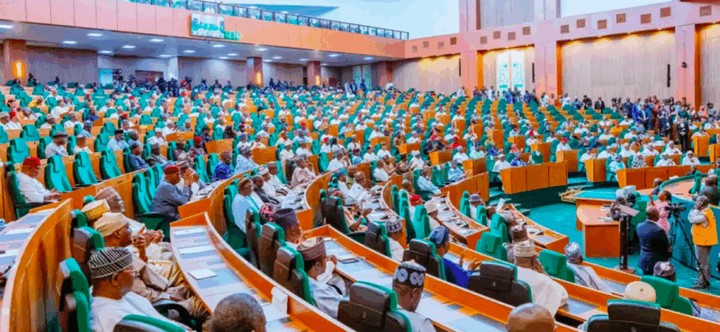
The initiative is modelled after international defence medical institutions and responds to national workforce shortages and the operational demands of a modern military.
Benson said the legislation was informed by the increasing migration of Nigerian medical personnel, recurrent industrial actions disrupting training in civilian medical schools, and the need for specialised military medical expertise, including trauma care, tropical medicine, battlefield emergency response, and other defence-related disciplines.
Leading debate on the bill, Benson, who chairs the house committee on defense, said the country’s healthcare system requires decisive intervention to improve its responsiveness and capacity.
He noted the efforts of the Nigerian army medical corps but stressed that the wider health sector continues to suffer from acute manpower shortages.
He recalled that Nigeria has witnessed a significant outflow of medical professionals, referencing a 2022 study which showed that between 2016 and 2018, more than 9,000 doctors left the country.
“The army’s requirement for doctors is at least 15 times the current number. Generally, retention rates are far below recruitment, leading to a net loss of skilled manpower with attendant consequences.”
Benson said the shortages have direct implications for military readiness, limiting routine services, surgical capability, and the staffing of military medical facilities.
He added that Nigeria’s physician-to-population ratio remains far below World Health Organisation (WHO) benchmarks.
He further argued that recurring university strikes have created prolonged academic disruptions, reducing student motivation and extending training timelines.
Military-run medical institutions, he noted, are shielded from such interruptions because they operate under military command.
In his words, students in such institutions receive service contracts and form part of the broader defence education system.
Benson highlighted examples from other countries, citing the Armed Forces Medical College in Pune, India, and the Uniformed Services University of the health sciences in the United States (U.S).
“These institutions produce doctors who are clinically competent and fully familiar with military structures, ethics and operational needs. Their graduates provide dependable staffing for military hospitals, defence-related research and leadership in field medical operations,” he said.
He added that establishing a similar institution in Nigeria would enable the use of contractual obligations and incentives, such as service scholarships, guaranteed job placement, and structured career progression, to boost retention.
Operating within defence structures, he said, would also insulate training from civilian academic strikes and ensure continuity.
Under the proposal, the Nigerian military medical college would function as a fully accredited medical school under the ministry of defense, working in collaboration with the National Universities Commission (NUC) and the medical and dental council of Nigeria.