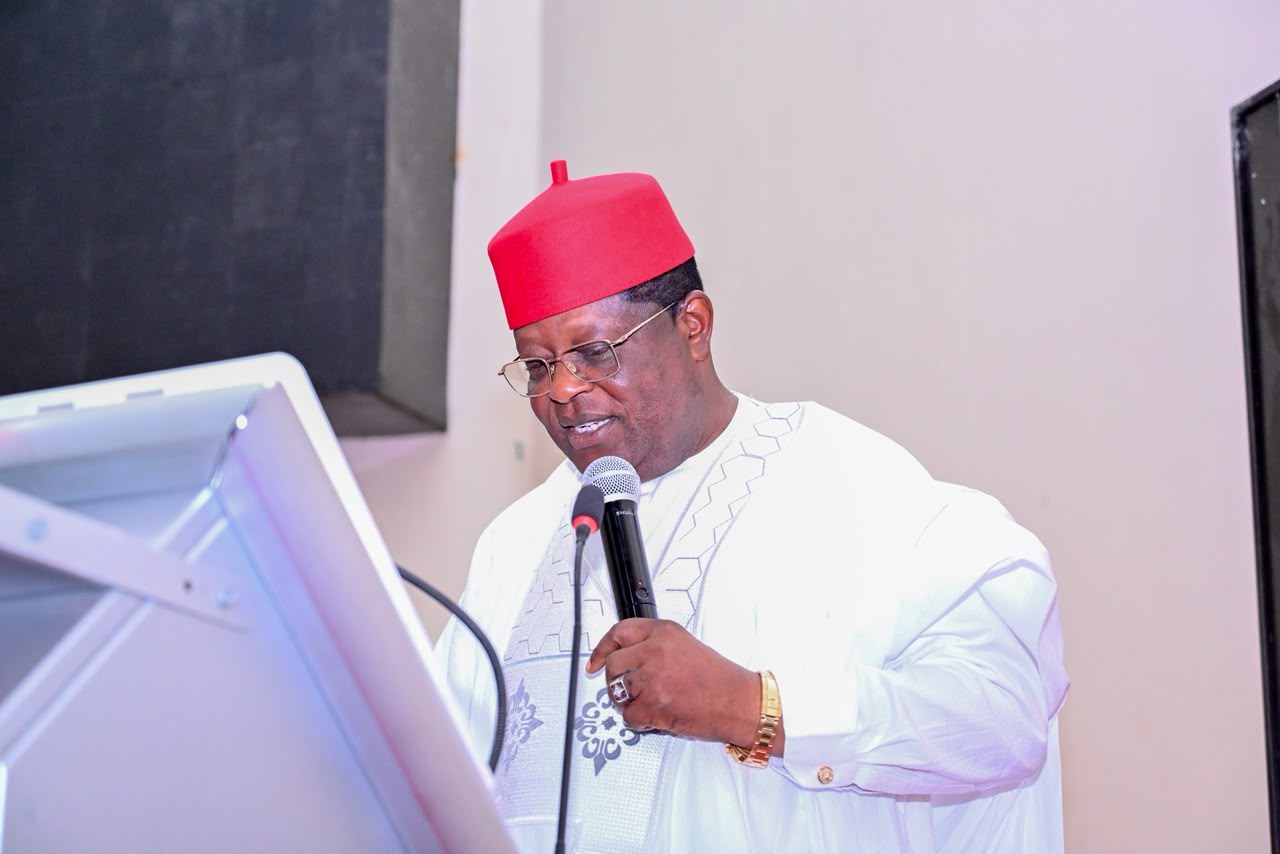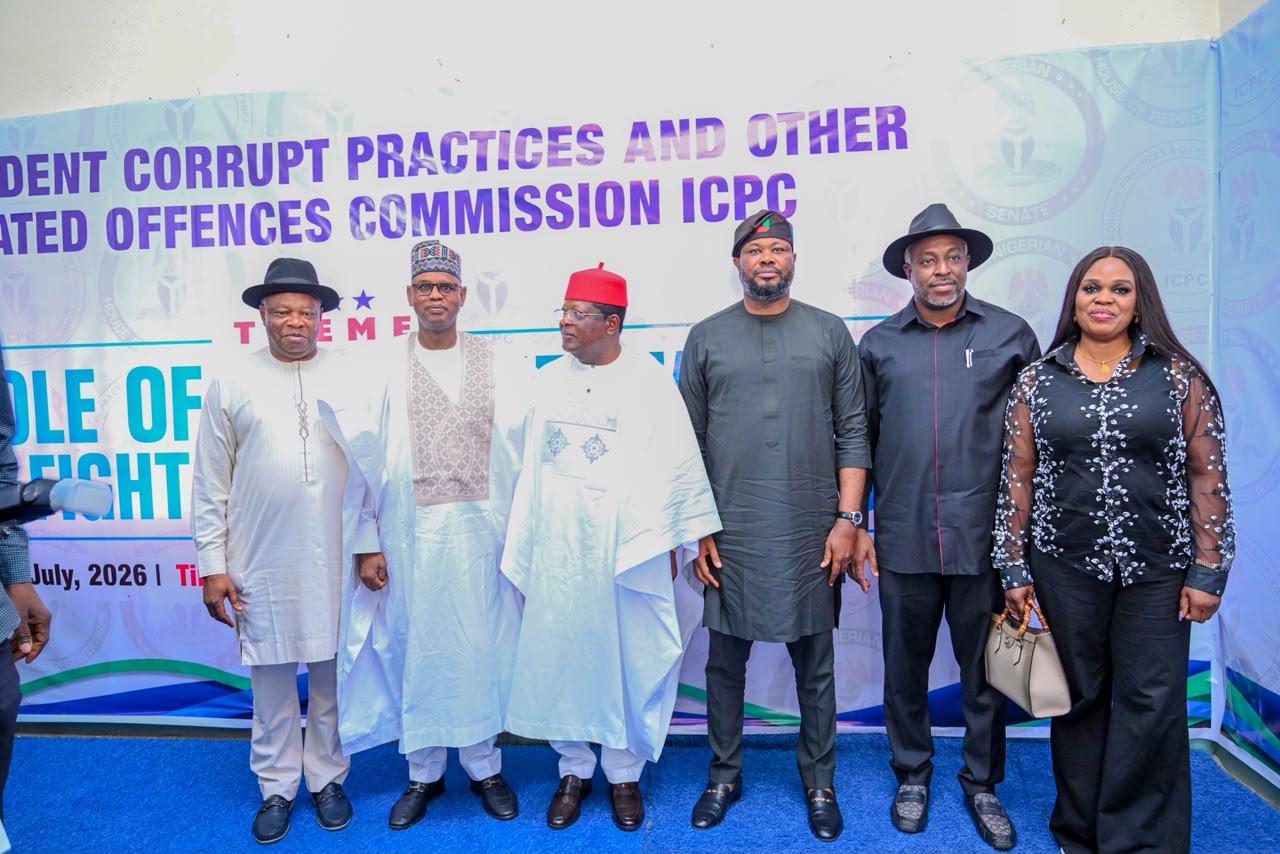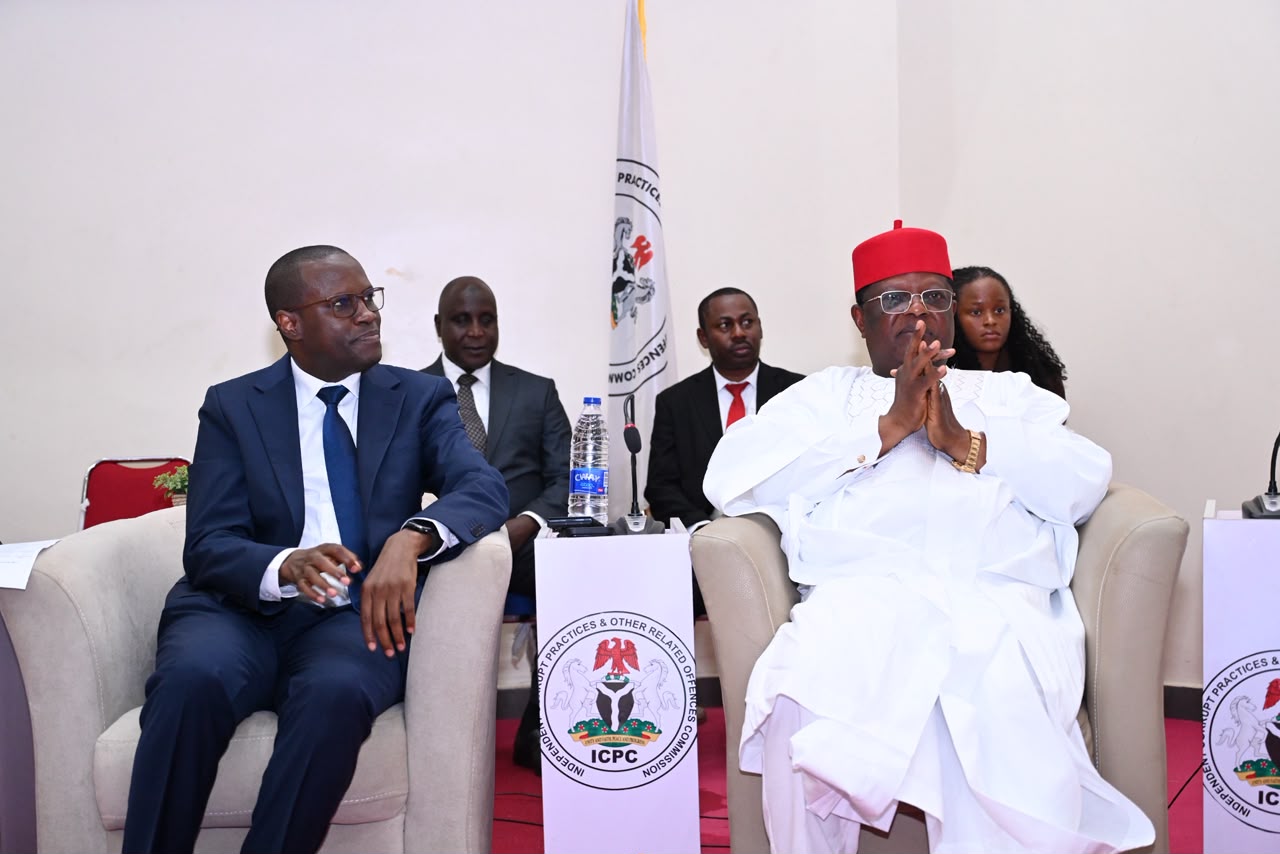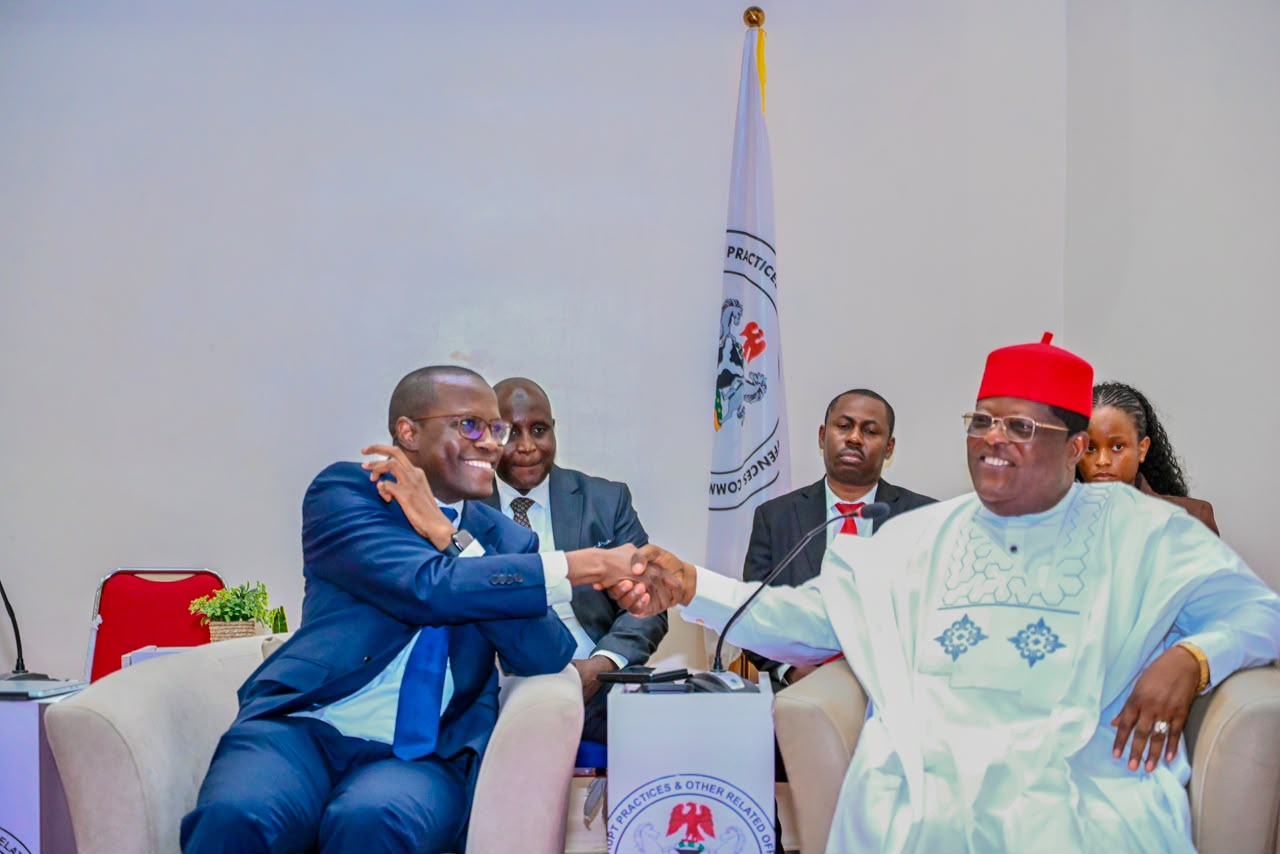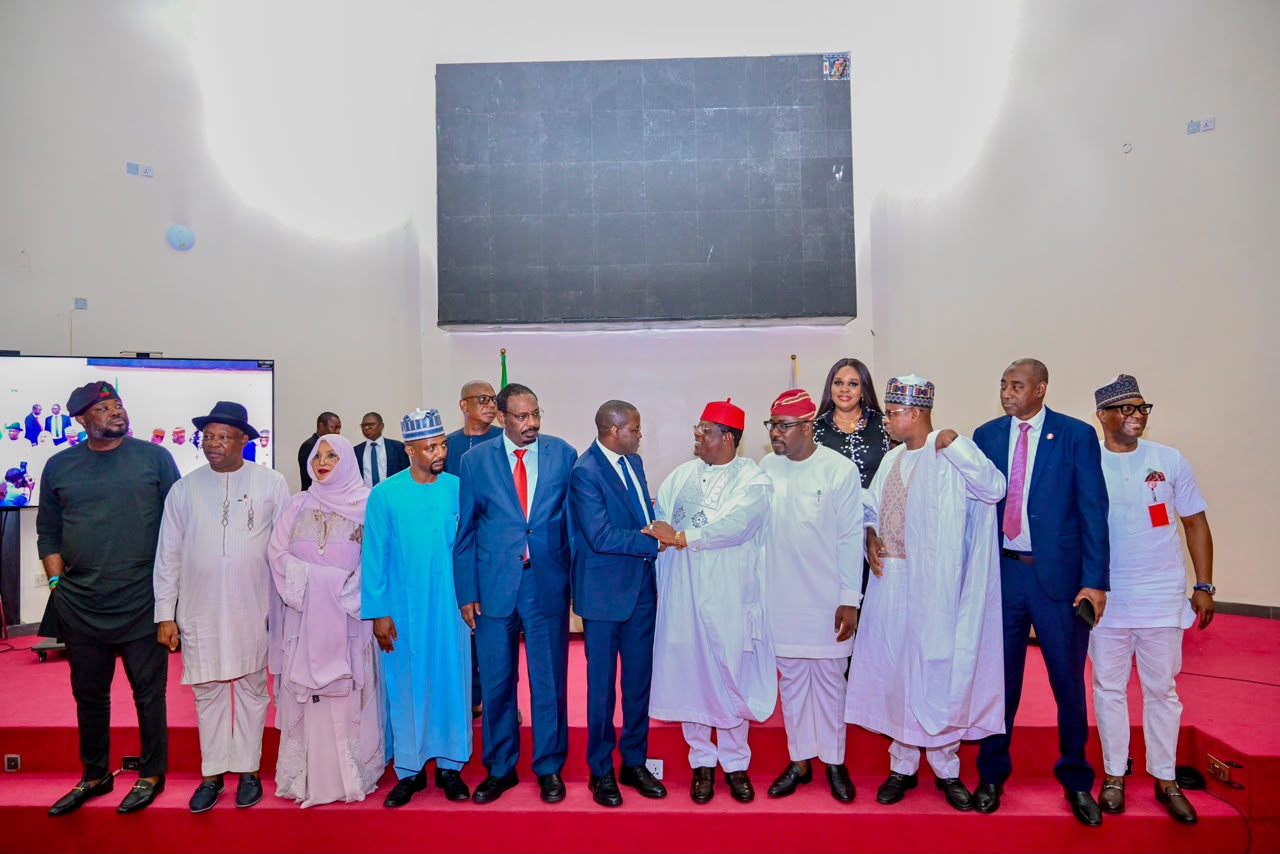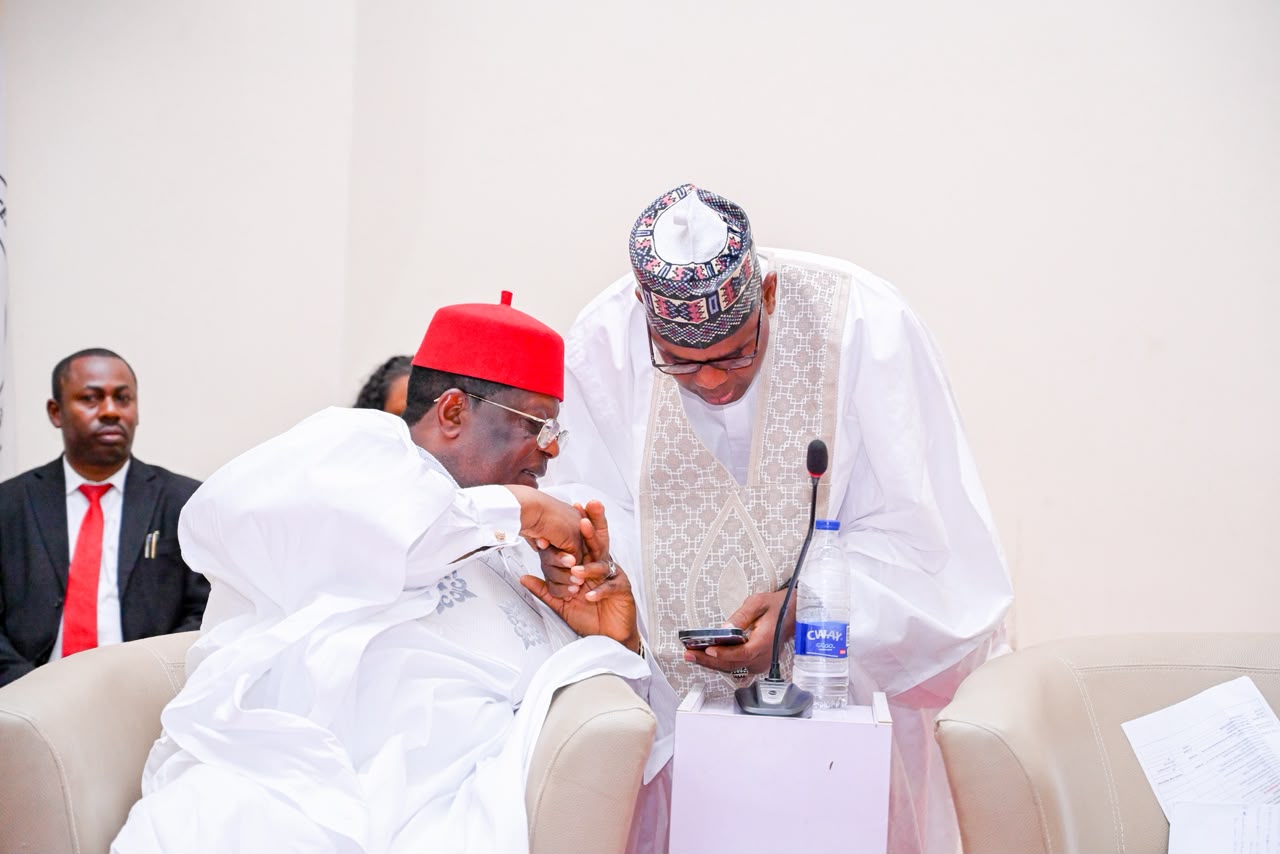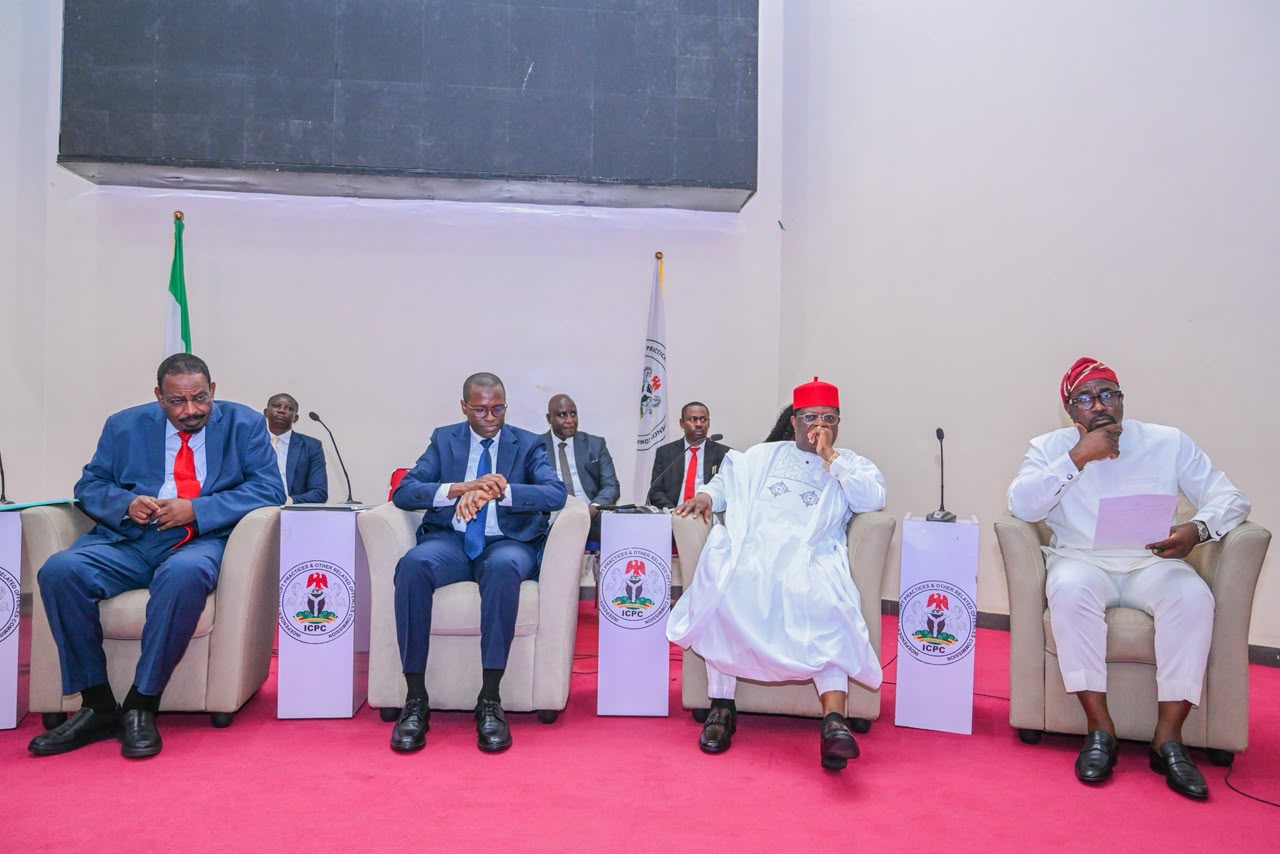

The Honourable Minister of Works, Senator Engr. David Umahi, CON, has declared that every kobo of public funds must be deployed for the benefit of Nigerians, insisting that corruption remains one of the greatest obstacles to national development and must be confronted through collective action, transparency and responsible leadership.
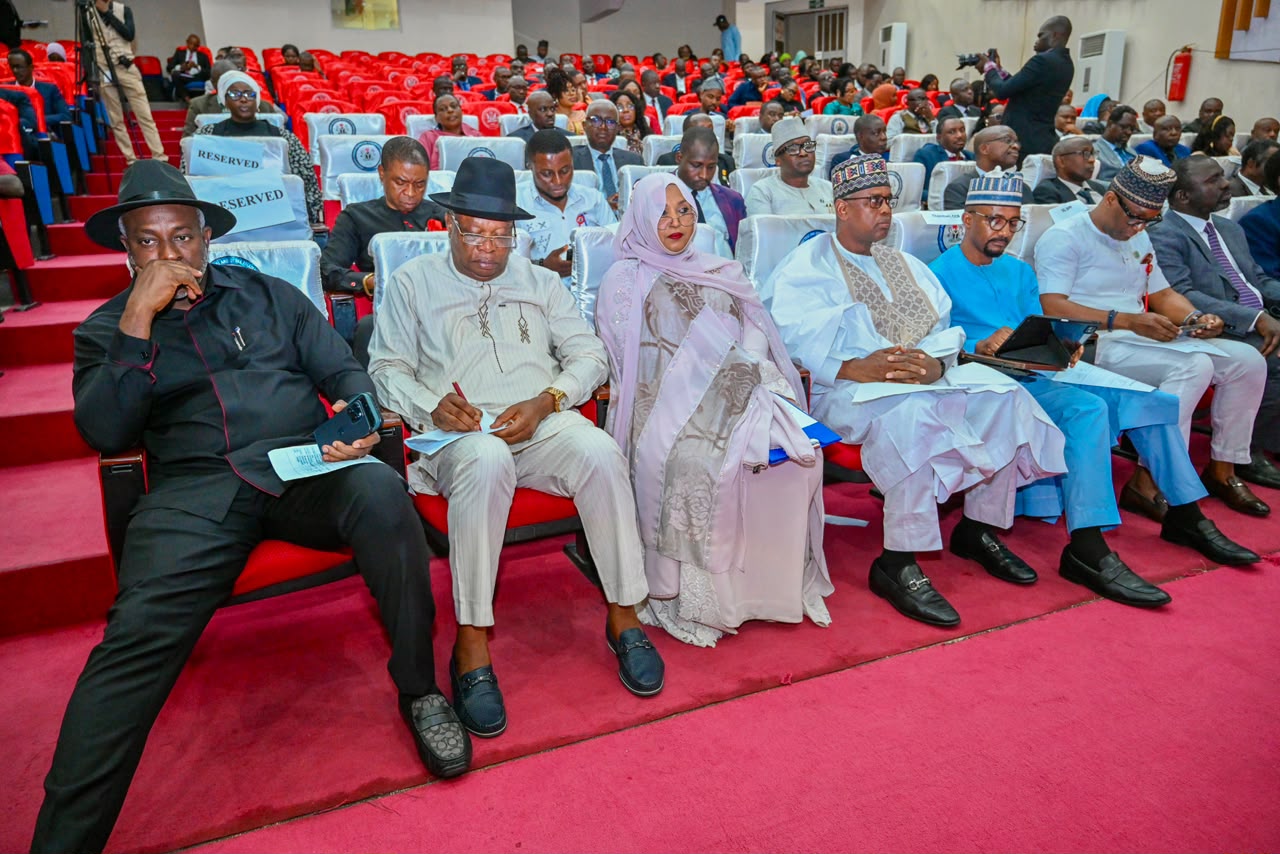
The Minister made the declaration on Thursday while delivering the keynote address at the official launch of the Joint Tracking Report organised by the Independent Corrupt Practices and Other Related Offences Commission (ICPC) in collaboration with the Federal Ministry of Works. The event, held at the ICPC Headquarters Auditorium in Abuja, brought together lawmakers, anti-corruption agencies, senior government officials and other key stakeholders to deliberate on the theme, “The Role of Parliamentarians in the Fight Against Corruption.”
Drawing from his experience in both the Executive and Legislative arms of government, as well as his current role in President Bola Ahmed Tinubu’s administration, Umahi said his years in public service have given him firsthand insight into ethical leadership, accountability and responsible governance.
“As one privileged to have served in both the Executive and the Legislature, and now as the Honourable Minister of Works, under the visionary leadership of His Excellency, President Bola Ahmed Tinubu, GCFR, I have witnessed firsthand ethical leadership, effective legislative oversight, and responsible governance.”
The Minister said President Tinubu’s administration remains committed to ensuring that public resources are used strictly for the benefit of Nigerians, stressing that financial discipline and accountability are essential to delivering meaningful development.
He described corruption as a threat that goes far beyond the diversion of public funds, warning that it weakens institutions, undermines justice and slows national progress.
“Corruption is not merely the misappropriation of public resources. It is an assault on development, justice, equity, and the confidence of citizens in government.”
According to Umahi, corruption deprives citizens of quality infrastructure, healthcare, education, agriculture and other essential services by diverting resources meant to improve their lives.
“Corruption diverts scarce resources from critical infrastructure, healthcare, education, agriculture, and social welfare, thereby slowing national development and deepening poverty.”
Speaking on the critical role of the National Assembly, the Minister described parliamentarians as indispensable partners in Nigeria’s anti-corruption drive because of their constitutional responsibilities in lawmaking, oversight and representation.
“Parliamentarians occupy a strategic position in the fight against corruption because they are the custodians of legislation, oversight, and representation. These constitutional responsibilities make them indispensable partners in promoting transparency and accountability.”
He urged lawmakers to continuously strengthen the nation’s legal framework by closing loopholes that enable corruption and enacting laws that reinforce transparency and fiscal responsibility.
“Members of Parliament must continually review existing laws, close legal loopholes that encourage corruption, strengthen anti-corruption institutions, and enact legislation that promotes transparency, accountability, public procurement reforms, and fiscal responsibility.”
The Minister also called for a constructive approach to legislative oversight, stressing that it should serve the national interest rather than become an avenue for conflict.
“Parliamentarians’ oversight function should never be reduced to confrontation; rather, it should be a constitutional mechanism for ensuring that public funds are utilised efficiently, lawfully, and for the intended purposes.”
Reflecting on his tenure as Governor of Ebonyi State, Umahi attributed the state’s remarkable infrastructure development to prudent financial management, strict monitoring of projects and direct supervision.
“Throughout my administration as Governor of Ebonyi State, we prioritized prudent management of public resources, value for money, strict project monitoring, and direct supervision of infrastructure projects.”
He maintained that defeating corruption requires the commitment of every segment of society and cannot be left to government institutions alone.
“Government alone cannot win the war against corruption. Parliamentarians, the Executive, the Judiciary, anti-corruption agencies, civil society organizations, the media, professional bodies, religious institutions, and ordinary citizens must work together in building a culture where integrity is rewarded and corruption is rejected.”
Umahi further emphasised that the anti-corruption campaign must outlive individuals and administrations by building strong institutions capable of sustaining transparency and accountability.
“The fight against corruption is not a one-time campaign; it is a continuous national commitment. Every generation has the responsibility to leave behind stronger institutions than it inherited.”
Bringing his address to a close, the Minister reminded participants that the fight against corruption is ultimately about securing Nigeria’s future and improving the lives of generations yet unborn.
“Let me conclude by reminding us that the fight against corruption is ultimately a fight for justice, development, national unity, and the future of our children.”
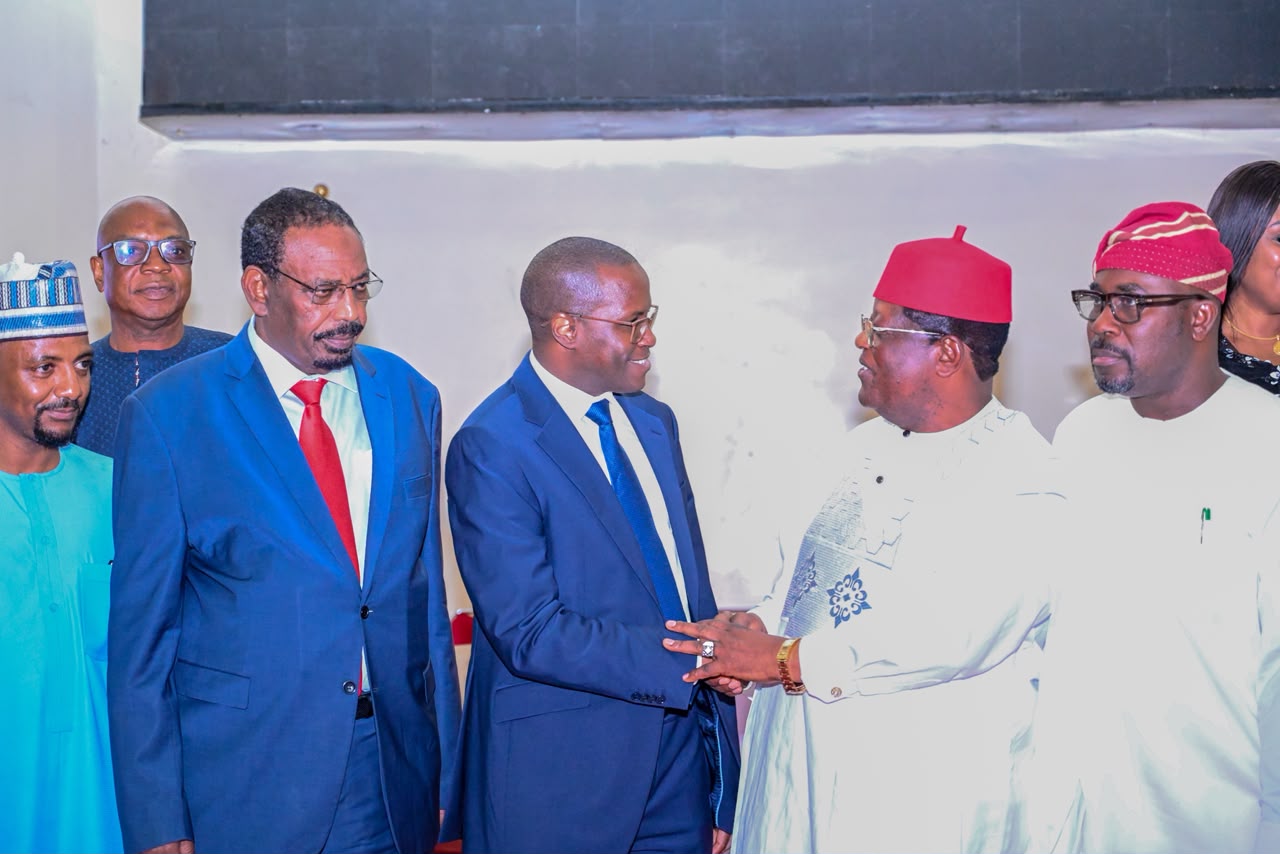
Among dignitaries present at the event were the Chairman of the Senate Committee on Anti-Corruption and Financial Crimes, Senator Emmanuel Udende; Chairman of the House Committee on Anti-Corruption, Hon. Kayode Moshood Akiolu; Chairman of the Code of Conduct Bureau, Dr. Abdullahi Usman Bello; Executive Chairman of the Economic and Financial Crimes Commission (EFCC), Mr. Ola Olukoyede; Director-General/Chief Executive Officer of the Nigeria Financial Intelligence Unit (NFIU), Ms. Hafsat Abubakar Bakari; Director-General of the Bureau of Public Procurement (BPP), Dr. Adebowale A. Adedokun, alongside senators, members of the House of Representatives and other stakeholders.